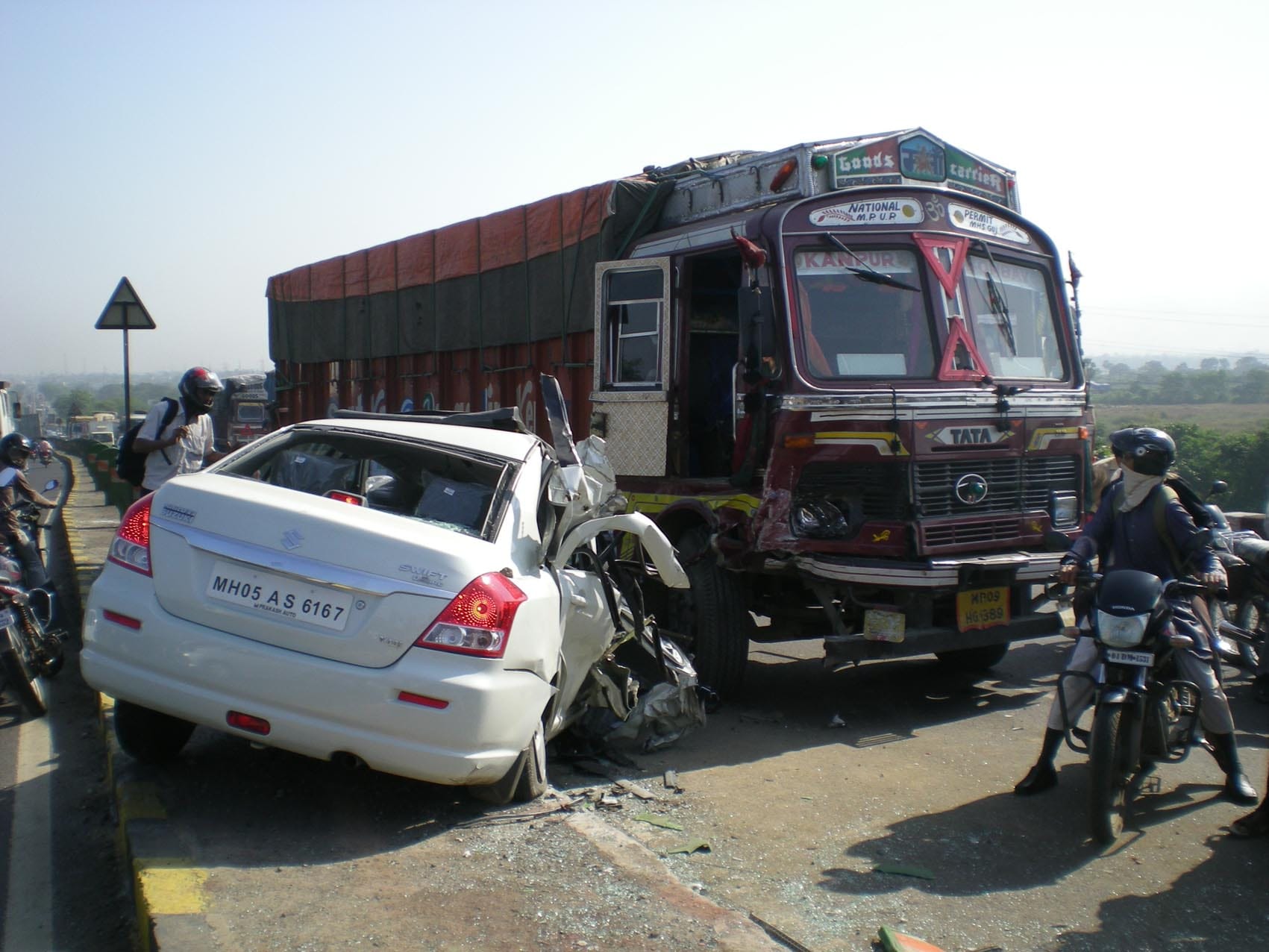
It is worth paying singular attention that in a very significant development, we see that the Kalaburagi Bench of Karnataka High Court at Bengaluru in a most learned, laudable, landmark, logical and latest oral judgment titled SB Shivamurthy Shivachary Hiremutt vs Shabir Ahamed and Ors in Miscl. First Appeal No.200322 of 2024 (MV-D) and cited in Neutral Citation No.: NC: 2026:KHC-K:2871-DB that was pronounced as recently as on April 2, 2026 has minced absolutely just no words to hold in no uncertain terms that religious institutions can claim compensation for the death of their head in a road accident. We need to note that this leading case arose from a 2011 road accident in which a Swamiji of a Mutt died in a head-on collision between a jeep and a truck. It must be also noted that a Division Bench comprising of Hon’ble Mr Justice Suraj Govindaraj and Hon’ble Mr Justice Tyagaraja N Inavally also clarified that “dependency” under the motor accident compensation law is not limited to biological family members and can include institutions that rely on the deceased. We thus see that the Court awarded Rs 5.94 lakh as compensation to the Mutt that was headed by Sutreshwar Shivacharya Swamiji who died in a road accident.
At the very outset, this brief, brilliant, bold and balanced oral judgment authored by Hon’ble Mr Justice Suraj Govindaraj for a Division Bench comprising of himself and Hon’ble Mr Justice Tyagaraja N Inavally of the Kalaburagi Bench of Karnataka High Court at Bengaluru sets the ball in motion by first and foremost putting forth in para 1 that, “The appellant who was the claimant before the Senior Civil Judge and JMFC, Shorapur (for short, ‘the Tribunal’) is before this Court challenging the judgment and award dated 01.09.2023 in MVC No.175/2013.”
To put things in perspective, the Division Bench envisages in para 2 that, “The proceedings before the Tribunal had been filed on account of death of Sutreshwar Shivacharya Swamiji in a road traffic accident on 20.05.2011 at 03.00 p.m., He was the priest of Bale Honnur Shrimad Rambapur Virsinhasan Mutt, Achaler, Taluk Lohara, District Osmanabad. The accident occurred while he was proceeding in a jeep near Ambika Dhaba Bormani road, due to a head-on collision with a truck bearing Reg.No.KA-38-7947, which was registered by the insurance company.”
While elaborating further, the Division Bench then points out in para 3 that, “The Tribunal, considering that the deceased was 55 years of age and accepting the fact that he was earning around Rs.20,000/- per month by giving lectures as also further amount of Rs.5,00,000/- from agriculture, being of the opinion that the successor of the Mutt was not a legal representative to claim loss of dependency, as such, denied compensation in respect of loss of dependency and awarded compensation only in respect of loss of estate at Rs.1,00,000/-and towards funeral expenses at Rs.20,000/- coming to a grand total of Rs.1,20,000/-. It is challenging the same, the claimant is before this Court contending that the Mutt, having lost the services of the Head of the Mutt, who expired in the said accident, loss of dependency is required to be granted to the Mutt of which the claimant is a representative.”
As things stands, the Division Bench observes in para 10 that, “The Tribunal, in our considered opinion, has fallen into error in referring to the status of a Mathadipati by holding that a Mathadipati belonging to a religious order is an ascetic who severs all connections with the members of his natural family, and that, as such, there can be no dependency. The severance considered by the Tribunal pertains only to the material renunciation undertaken upon accepting an ascetic life, and not to a complete disassociation in all respects. In the present case, the person who accepted the ascetic life continued to serve the needs of the Mutt and discharged managerial duties in respect of the said Mutt.”
Most significantly, the Division Bench encapsulates in para 15 what constitutes the cornerstone of this notable judgment postulating precisely that, “The Hon’ble Supreme Court proceeded to hold that even where a deceased had severed ties with his biological family upon entering religious service, it cannot be presumed that there are no dependants. In such circumstances, the religious institution— being the recipient of the fruits of his labour and service, would stand in the position of a legal representative and would be entitled to claim compensation. The Hon’ble Supreme Court thereby expanded the traditional understanding of dependency to include institutional and economic dependency, in addition to familial dependency.”
Be it noted, the Division Bench notes in para 16 that, “The ratio of the aforesaid judgment applies with greater force to the facts of the present case. The deceased herein was a Mathadipati of Bale Honnur Shrimad Rambapur Virsinhasan Mutt, Achaler, Taluk Lohara, District Osmanabad. The position of a Mathadipati is not that of an ordinary individual earning for personal sustenance, but that of a spiritual head whose role is integrally connected with the functioning, administration, and continuity of the Mutt.”
It is also worth noting that the Division Bench notes in para 17 that, “It is a matter of settled understanding that upon assuming the office of a Mathadipati, the individual renounces personal ownership and material pursuits. The offerings, income, and benefits associated with the position are not appropriated for personal gain but accrue to the Mutt as a religious and juristic institution. The Mathadipati, therefore, acts not in his individual capacity but as a custodian and representative of the institution.”
It would be instructive to note that the Division Bench then hastens to add in para 18 noting that, “In such a framework, the economic relationship is inverted from the conventional model. Instead of the individual supporting dependants, it is the institution that derives benefit from the individual’s position, services, and spiritual authority. The dependency, therefore, is institution-centric, and the loss occasioned by the death of the Mathadipati is borne by the institution in terms of disruption of leadership, administration, and continuity of its activities.”
It would be worthwhile to note that the Division Bench notes in para 19 that, “The claim petition in the present case has been filed by the claimant representing the Mutt and not in an individual capacity. This distinction is of critical importance. The compensation, if awarded, would not enure to the benefit of any natural person, including the successor Swamiji, who is likewise an ascetic and bound by similar renunciatory principles. The benefit would vest in the Mutt as a continuing religious entity.”
Notably, the Division Bench points out in para 20 that, “The Tribunal, in denying compensation on the ground that there were no dependants, has adopted an unduly restrictive and formalistic interpretation of the concept of dependency. Such an approach fails to take into account the broader jurisprudential evolution in motor accident compensation law, where dependency is not confined to blood relations but extends to all those who are economically or functionally reliant on the deceased.”
While taking potshots at the findings of the Tribunal, the Division Bench observes in para 21 that, “The error of the Tribunal lies in equating dependency exclusively with familial dependency and overlooking institutional dependency. This is contrary to the law laid down by the Hon’ble Supreme Court, which clearly recognises that the expression “legal representative” must be interpreted in a manner that advances the object of compensation law, namely, to provide restitution for loss caused by death.”
It cannot be lost sight of that the Division Bench points out in para 22 that, “The death of a Mathadipati results not merely in the cessation of an individual life, but in a tangible institutional loss, including:
22.1. loss of spiritual leadership,
22.2. disruption of administrative continuity,
22.3. diminution in institutional efficacy, and
22.4. potential impact on offerings and institutional income.”
Truth be told, the Division Bench very rightly observes in para 23 that, “Such loss is neither speculative nor remote, but is a direct consequence of the death and is therefore compensable in law.”
Most commendably, the Division Bench propounds in para 24 holding that, “It must also be noted that the law of compensation, particularly under the Motor Vehicles Act, is a beneficial legislation, intended to provide just and equitable relief. The interpretation of expressions such as “legal representative” and “dependency” must, therefore, be liberal and purposive, rather than restrictive.”
Most rationally, the Division Bench expounds in para 25 holding that, “In light of the above, we are of the considered
opinion that:
25.1. the Mutt represents the estate and interest of the deceased in a legal and functional sense;
25.2. the Mutt qualifies as a “legal representative” within the meaning of law;
25.3. the Mutt has suffered institutional and economic loss on account of the death; and
25.4. the denial of compensation by the Tribunal is contrary to settled legal principles.”
As a corollary, the Division Bench then directs and holds in para 26 that, “The reasoning of the Tribunal, therefore, cannot be sustained and is liable to be set aside. The claim for compensation, including under the head of loss of dependency, is maintainable at the instance of the Mutt.”
Finally, the Division Bench then concludes by directing and holding in para 37 that, “Hence, we pass the following:
ORDER
i. The appeal is allowed in part.
ii. The impugned judgment and award passed by the Tribunal is modified. The claimant is entitled to enhanced compensation of Rs. 4,74,330/- with interest at the rate of 6% per annum from the date of petition till the date of realization.
iii. The second respondent/insurance company is directed to deposit the compensation amount within a period of four weeks from date of the receipt of certified copy of this judgment.”
In essence, we thus see that Kalaburagi Bench of the Karnataka High Court has made it indubitably clear that motor accident claims is not limited to just family alone. It was also made crystal clear that institutions relying on deceased can also claim compensation. No denying!
Sanjeev Sirohi