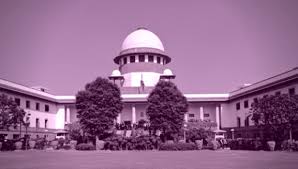
The Supreme Court of India has completed hearings and reserved its verdict on whether the government can grant “ex post facto” (retrospective) environmental clearances to projects that started work without prior approval.
The Legal Dispute
A three-judge Bench led by Chief Justice Surya Kant, along with Justices Joymalya Bagchi and Vipul M. Pancholi, heard the matter and concluded proceedings on April 1, 2026.
The case arises from petitions filed by environmental NGO Vanashakti, challenging a 2025 judgment that allowed certain projects to be regularized later through retrospective Environmental Clearance (EC).
Core Issue (Fact-Checked)
The main question before the Court is:
- Is prior environmental clearance mandatory in all cases, or
- Can post-facto approval be allowed in some situations to avoid losses?
⚠️ Fact check:
Indian environmental law clearly treats prior EC as the general rule. Courts have often criticized retrospective approvals, but in limited cases, they have been considered to balance public interest and economic impact. The law on this issue is still evolving.
Background: Changing Court Views
- May 2025: A two-judge Bench struck down government notifications (2017 & 2021) allowing retrospective clearance, calling it a “gross illegality.”
- November 2025: A three-judge Bench reversed this view, noting that demolishing large projects (like hospitals and airports worth about ₹20,000 crore) would harm the public and waste taxpayer money.
- Current Stage: The present Bench is reviewing that decision to check whether environmental protections were weakened.
Arguments in Court
Petitioners (Vanashakti):
- Emphasized the Precautionary Principle in environmental law.
- Argued that allowing retrospective clearance would weaken safeguards and encourage violations.
Government & industry bodies (including CREDAI):
- Argued that a strict ban could stop important infrastructure projects.
- Said post-facto clearance helps regulate violations instead of abandoning projects.
Why This Verdict Matters
The upcoming judgment will have a nationwide impact:
- If retrospective clearances are rejected → Projects may face penalties or even demolition.
- If allowed → It will provide legal support to regularize ongoing or completed projects.
Key Takeaway (Fact-Checked)
- Prior environmental clearance remains the standard legal requirement.
- The Supreme Court’s decision will clarify whether exceptions (post-facto approvals) can be legally permitted in the interest of public and economic concerns.