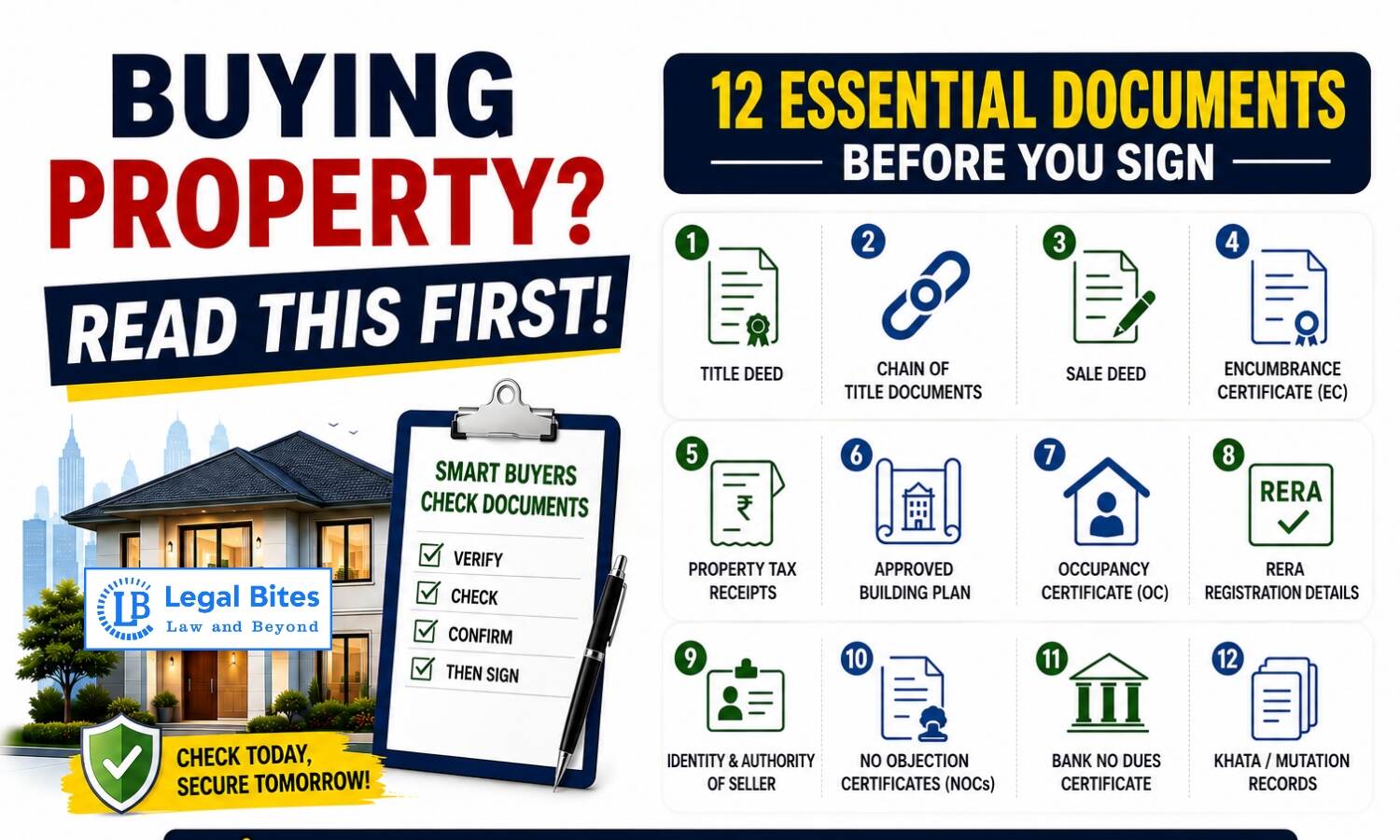
Buying a property is one of the biggest financial decisions you will ever make. Whether you are purchasing a flat, an independent house, or a plot of land, verifying the legal documents is just as important as arranging the finances. A property with an unclear title, missing approvals, or undisclosed liabilities can lead to prolonged litigation, financial losses, and difficulties obtaining loans or transferring ownership in the future.
In India, due diligence is an essential part of every real estate transaction. Before signing any agreement or making substantial payments, ensure that all necessary documents have been thoroughly verified. This guide covers the 12 essential documents every property buyer should check before finalising a purchase.
Why Document Verification Matters
Property transactions involve legal, financial, and regulatory compliance. Proper document verification helps you:
- Confirm the seller’s legal ownership.
- Ensure the property has all statutory approvals.
- Detect mortgages, charges, or pending litigation.
- Avoid fraudulent transactions.
- Facilitate smooth home loan approvals.
- Prevent future legal disputes.
A few hours spent verifying documents can save years of legal complications.
1. Title Deed
The Title Deed is the most important document in any property transaction. It establishes the seller’s ownership over the property.
Before proceeding, verify that:
- The seller’s name matches government records.
- The property description is accurate.
- The title is clear, marketable, and free from disputes.
- There are no conflicting ownership claims.
If the property has multiple owners, all co-owners should execute the sale deed or provide valid legal authority.
2. Previous Title Documents (Chain of Ownership)
A buyer should verify how ownership has passed from one owner to another over the years.
The chain of title may include:
- Previous Sale Deeds
- Gift Deeds
- Partition Deeds
- Release Deeds
- Inheritance documents
- Court decrees
A continuous ownership history generally covering the previous 30 years provides greater confidence regarding marketable title.
3. Sale Deed
The Sale Deed legally transfers ownership from the seller to the buyer.
Before signing, verify:
- Correct names of parties
- Accurate property description
- Sale consideration
- Possession clause
- Schedule of property
- Signatures of all required parties
Ownership legally passes only after execution and registration of the Sale Deed under the Registration Act, 1908.
4. Encumbrance Certificate (EC)
The Encumbrance Certificate helps determine whether the property is free from registered financial or legal liabilities.
It reveals:
- Mortgages
- Charges
- Registered leases
- Court attachments
- Previous registered transactions
A Nil Encumbrance Certificate generally indicates that no registered encumbrances exist during the specified period. However, unregistered liabilities may still require separate verification.
5. Property Tax Receipts
Ensure that municipal property taxes have been paid regularly.
Check:
- Latest tax receipts
- Outstanding dues
- Municipal assessment records
- Name of the recorded owner
Pending tax liabilities may create future complications for the purchaser.
6. Approved Building Plan
If you are buying a constructed property, ask for the sanctioned building plan approved by the competent local authority.
Verify that:
- The construction matches the approved plan.
- The number of floors is authorised.
- Setbacks comply with regulations.
- Built-up area corresponds with approvals.
Unauthorised construction may lead to penalties or demolition proceedings.
7. Occupancy Certificate (OC)
An Occupancy Certificate certifies that the completed building is fit for occupation and complies with approved plans.
For apartments and newly constructed buildings, this document is often essential before taking possession.
8. RERA Registration Details
Under the Real Estate (Regulation and Development) Act, 2016, many real estate projects must be registered with the respective State Real Estate Regulatory Authority.
Verify:
- Project registration number
- Promoter details
- Project approvals
- Construction status
- Completion timeline
- Litigation disclosures
Buyers should independently verify project details through the concerned State RERA portal.
9. Khata Certificate / Mutation Records / Record of Rights
Different States maintain different revenue records.
These may include:
- Khata Certificate
- Mutation Certificate
- Patta
- Jamabandi
- Record of Rights (RoR)
These records show that the property has been entered into municipal or revenue records and facilitate taxation and future transactions. However, they do not by themselves establish ownership.
10. Identity Proof and Authority of the Seller
Always verify the seller’s identity.
Obtain copies of:
- Aadhaar Card
- PAN Card
- Passport or other government identification (where applicable)
If the property is being sold through an attorney holder, verify:
- Registered Power of Attorney
- Scope of authority
- Validity of execution
11. No Objection Certificates (NOCs)
Depending upon the nature and location of the property, various approvals may be required.
These may include NOCs from:
- Fire Department
- Airport Authority
- Pollution Control Board
- Electricity Department
- Water Authority
- Housing Society or Cooperative Society
Applicable requirements vary across States and local authorities.
12. Bank No Dues Certificate (If Property Was Mortgaged)
If the property was financed through a bank or financial institution, obtain:
- Loan closure certificate
- No Dues Certificate
- Mortgage release documents
Ensure that any charge created over the property has been appropriately released.
Bonus Tip: Obtain a Legal Due Diligence Report
Before making the final payment or executing the sale deed, consider engaging an experienced property lawyer to conduct legal due diligence.
A professional legal opinion typically examines:
- Title verification
- Chain of ownership
- Encumbrances
- Pending litigation
- Government approvals
- Revenue records
- Regulatory compliance
Although it involves a small additional expense, legal due diligence can prevent costly disputes later.
Common Mistakes Property Buyers Should Avoid
- Relying solely on the builder’s assurances.
- Not inspecting original documents.
- Ignoring pending litigation.
- Paying substantial amounts before verification.
- Assuming mutation records establish ownership.
- Purchasing without verifying RERA registration (where applicable).
- Overlooking unauthorised construction.
- Skipping professional legal advice.
Conclusion
Buying a property is more than a financial investment; it is a long-term legal commitment. Proper verification of ownership documents, statutory approvals, tax records, and regulatory compliance significantly reduces the risk of fraud and future litigation.
Before signing any agreement or making the final payment, ensure that every document has been carefully examined. When in doubt, seek independent legal advice. A well-informed purchase today can protect your investment for decades to come.