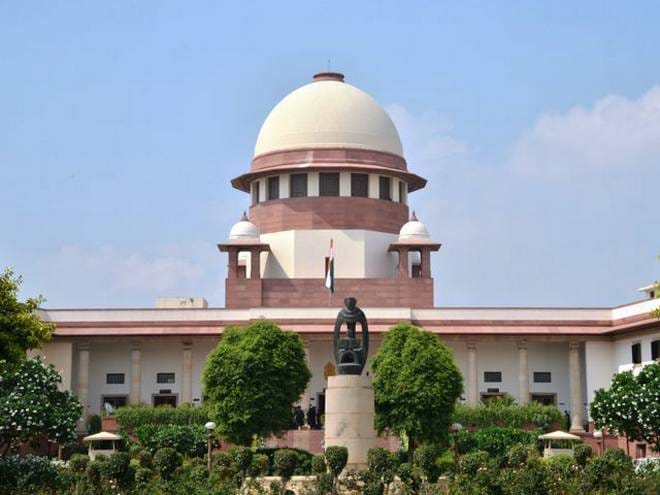
The Supreme Court of India has taken suo motu cognisance of a shocking incident in which a Delhi-based lawyer was allegedly brutally stabbed by her husband, leaving her in critical condition. The case has been registered as In Re: Brutal Assault on a Member of the Legal Fraternity and Need for Judicial Intervention.
A Bench comprising Chief Justice of India Surya Kant and Justice Joymalya Bagchi briefly heard the matter on Monday.
The victim, advocate Madhu Rajput, who practices in Delhi courts, was reportedly attacked with a sword by her husband at his office. Despite severe injuries, she managed to alert authorities through PCR calls.
During the hearing, advocate Sneha Kalita informed the Court that the victim was allegedly denied emergency treatment at multiple hospitals immediately after the attack. The Court noted that she had first approached GTB Hospital, RK Hospital, and Kailash Hospital, but was not admitted. She was eventually treated at the AIIMS Trauma Centre.
Expressing concern over these allegations, the Bench directed that the refusal of emergency medical care be investigated. “Let this aspect of non-admission by hospitals be probed into,” the Court ordered.
The Court also directed the Commissioner of the Delhi Police to assign the investigation to a senior officer, preferably a woman officer of the rank of Superintendent of Police (SP) or Deputy SP.
Recognising the victim’s financial needs for medical treatment and care of her children, the Court instructed the judicial member secretary of the National Legal Services Authority (NALSA) to immediately provide financial assistance, with funds to be deposited by the next day.
The Bench has sought a detailed status report on the investigation before the next hearing.
CJI Kant stated that he had received a letter regarding the incident on Sunday and promptly ordered the registration of a suo motu case.
Appearing for the Centre, Additional Solicitor General Aishwarya Bhati informed the Court that the accused husband has been arrested and an FIR registered under Section 109(1) of the BNSS. She added that the victim had been treated at AIIMS, discharged, and is currently recovering in a private hospital.
However, the Court questioned the alleged denial of emergency treatment, asking, “Why did the hospital deny emergency treatment?”
The interim order also recorded the severity of the attack, noting photographic evidence indicating injuries to vital organs. While the primary accused has been arrested, the victim’s in-laws, against whom allegations have been raised, are reportedly absconding.
The Court further took note of the victim’s three minor daughters—aged 12, 4, and 1—who are currently under the care of their maternal grandparents. It observed that the children were abandoned by their father following the incident.
Directing the police to verify the children’s whereabouts, the Court allowed their custody to remain with the maternal grandparents for now, particularly noting that the eldest child should continue under their care.