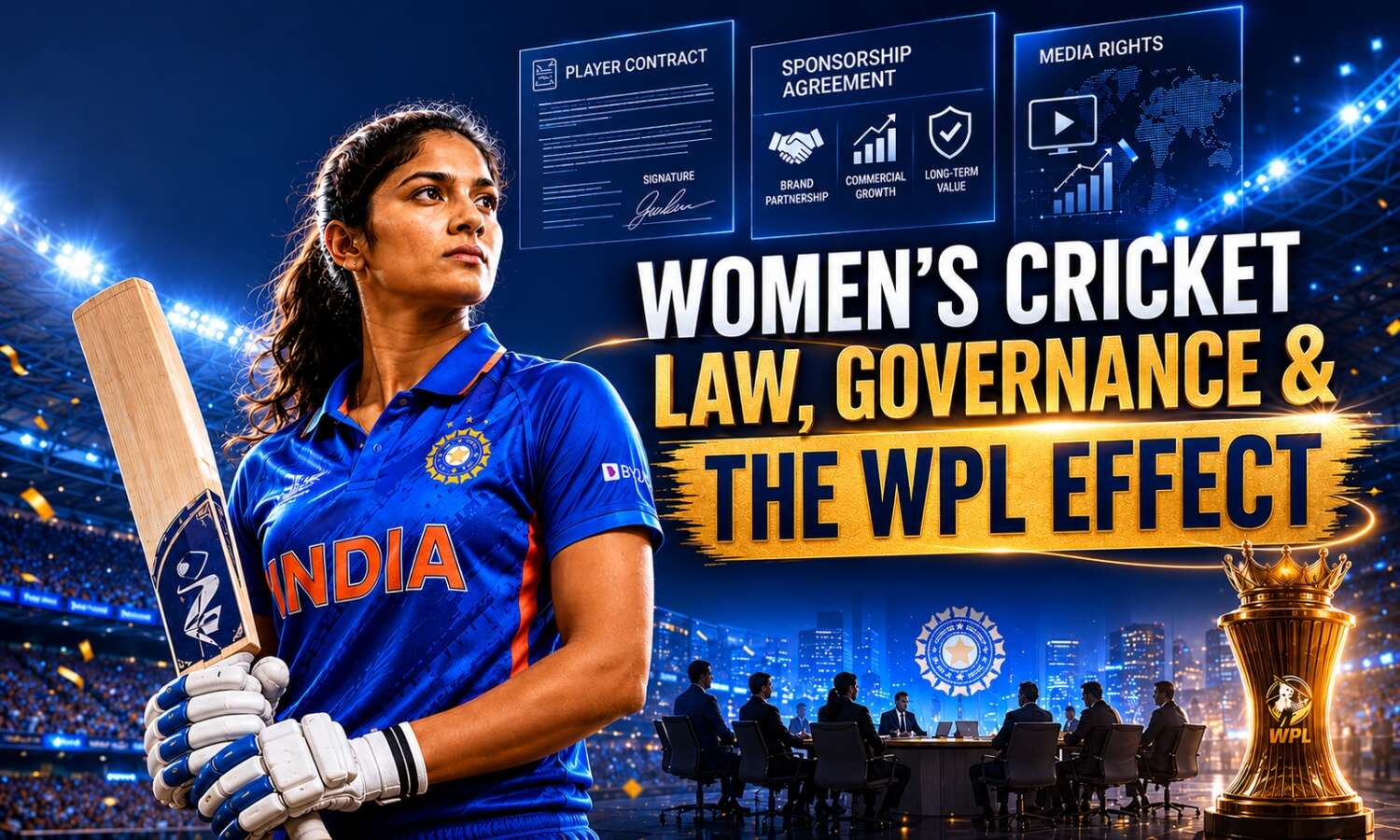
The legal evolution of cricket women in India is not only about matches, trophies, or famous innings. It is about recognition, contracts, governance, pay structures, media rights, and the slow movement of cricket women from informal support toward professional protection. Women’s cricket in India did not grow because one rule changed overnight. It grew because law, administration, public pressure, and commercial value started pulling in the same direction.
This is where sports law India becomes important. Cricket may look like pure emotion on screen, but the system behind it depends on rules: who runs the sport, who pays players, who owns league rights, how contracts are written, how disputes are handled, and how athletes are protected. Women’s cricket has gained strength because those questions are finally being treated as serious legal and governance issues.
From Separate Administration to BCCI Control
For a long time, women’s cricket in India was always outside the realm of power structures in the game. The creation of the Women’s Cricket Association of India in the 1970s offered women’s cricket its own organized framework; however, this entity lacked the economic clout, media reach, and other institutional attributes that were present in the male-dominated structures.
The inclusion of women’s cricket within the BCCI structures since 2006 marked the change in its legal and administrative framework. It did not solve every problem immediately, but it moved the women’s game into the same governing house as Indian cricket’s strongest commercial engine. That mattered because governance is not just paperwork. It decides whether players receive better tours, stronger contracts, medical support, domestic pathways, and national recognition.
The shift also changed public expectation. Once women’s cricket sat under the BCCI umbrella, comparisons with the men’s system became unavoidable. Fans, players, journalists, and legal observers could ask sharper questions. Why should facilities differ so much? Why should visibility remain low? Why should elite women athletes not receive stronger commercial and contractual backing?
That pressure was healthy. It forced the system to move from charity language to professional language. Women cricketers were no longer framed only as inspirational figures. They were athletes working inside a national sports economy.
Pay Equity and the Contract Question
The most visible legal step came when BCCI announced equal match fees for centrally contracted women and men cricketers in international cricket. That decision mattered because match fee is not symbolism alone. It is a legal and financial statement that the same national jersey should carry the same match-day value.
For Indian women cricketers, equal match fees strengthened professional dignity. A Test, ODI, or T20I appearance became valued through the same match-fee lens, regardless of gender. The decision did not erase all income gaps, because endorsements, league salaries, central contract values, and tournament revenues still differ. Yet it created a clear benchmark: representing India should not be discounted because the player is a woman.
The contract question is wider than match fees. A modern professional system must cover retainers, injury support, travel standards, insurance, image rights, workload management, maternity-related protections, and dispute processes. Cricket careers are short. Legal clarity helps players plan them with less uncertainty.
A strong player contract should clearly address:
- Payment Terms: Match fees, retainers, league salaries, bonuses, and timing of payments.
- Player Welfare: Injury cover, medical access, mental health support, and workload planning.
- Commercial Rights: Use of name, image, jersey number, interviews, and promotional duties.
- Dispute Resolution: A fair process for contract disagreements, selection-related concerns, and disciplinary matters.
This is where women’s cricket needs constant attention. Pay equity was a milestone, not the finish line. The deeper goal is a system where every serious player understands her rights, duties, protections, and commercial value.
Women’s Premier League and Commercial Legitimacy
The launch of the Women’s Premier League gave women’s cricket a legal and business identity that domestic cricket alone could not provide. A franchise league creates contracts, auctions, media rights, team ownership structures, sponsorship agreements, player obligations, and brand duties. That is why WPL changed more than the playing calendar. It created a formal market.
Before the league, a talented Indian player could become visible through international cricket or a major domestic performance, but the commercial pathway was narrow. WPL widened that road. Suddenly, players had franchise contracts, televised matches, packed venues, and clearer brand recognition. That visibility has legal consequences because market value needs formal protection.
The league also helped standardise professional expectations. Franchises need compliance teams, medical staff, anti-corruption education, player management systems, and clear codes of conduct. Players learn how to handle media, sponsorship duties, team protocols, and tournament regulations. These are not side issues. They are part of being a modern professional athlete.
Why Franchise Cricket Changed the Legal Picture
The franchise system revolutionized women’s cricket by bringing value into play. The moment an individual is purchased, kept, sold, promoted, or employed as a team ambassador, she is placed in a contractual arrangement. This is liberating in many ways, but it calls for higher legal literacy levels.
This may include a contract that includes conditions on playing time, participation in training sessions, photo shoots, use of image rights, sponsorships, confidentiality provisions, injury notification, and performance-based responsibilities. Younger players must be guided through this paperwork. Talent shouldn’t be made aware of contract risk only when something goes wrong.
The WPL also changed how teams evaluate domestic talent. Uncapped players now have a route into high-pressure cricket without waiting for a national debut. That improves competition. It also creates new legal needs around agent representation, player education, fair selection processes, and transparent communication.
Governance, Accountability, and Athlete Voice
However, the debate surrounding sports governance in India has become increasingly pointed in the last few years. Even though cricket has its own well-defined system of governance, this is not immune to the national debate on transparency, democracy, welfare, tenure regulations, disputes, and ethics. This has a positive impact on women’s cricket.
Good governance is essential since athletes are often placed below administrators when it comes to hierarchical structures. An athlete will not be assured of being selected, but good governance means that he or she will have an assurance of the procedure followed. The athlete should know what goes behind decision-making and the welfare mechanisms put in place.
This is particularly relevant in terms of female athletes since the historical lack of development meant that there were some deficiencies structurally. It is true that any system which is poorly governed would disadvantage all athletes equally, but disadvantaged emerging female athletes are at even more of a risk.
Gender Equality as a Governance Standard
The phrase gender equality in sports should not be reduced to slogans. In cricket, it means fair access to grounds, coaching, sports science, safe travel, match fees, medical care, scheduling, broadcast quality, and leadership positions. Equality is not only what happens on the scorecard. It is what happens before the toss.
A serious equality framework should ask direct questions:
- Facilities: Do women get quality training grounds, gym access, recovery support, and practice wickets?
- Scheduling: Are women’s matches placed where fans can actually attend and watch?
- Leadership: Are former women players involved in selection, coaching, administration, and policy?
- Safety: Are travel, accommodation, reporting channels, and dressing-room environments properly protected?
These questions sound administrative, but they shape performance. A player who trains in a better system plays with more confidence. A team that travels professionally recovers better. A domestic cricketer who sees a real pathway stays in the game longer.
Media Rights, Sponsorship, and Legal Value
The growth of cricket among women in India is now tied closely to media and sponsorship law. Visibility creates value, but value must be organised through contracts. Broadcast agreements, digital clips, player interviews, jersey rights, and sponsor activations all sit inside legal frameworks.
This shift matters because commercial value can either empower athletes or leave them exposed. A player’s image should not be used casually. A sponsor obligation should be clear. A tournament’s media rights should support the development of the game, not only short-term promotion. The stronger the market becomes, the more important legal literacy becomes.
Women’s cricket also needs better data protection and digital conduct policies. Players now face constant online attention. That includes praise, criticism, impersonation, abuse, and misuse of images. Modern sports law cannot stop at contracts and fees. It must also protect athletes in digital spaces where reputations can be damaged quickly.
Domestic Cricket as the Legal Foundation
A national team cannot grow without a protected domestic base. Domestic women’s cricket needs clear tournament structures, fair selection policies, reliable payments, proper facilities, and transparent communication from state associations. If the legal base is weak below the top level, the national team eventually feels it.
State associations play a major role here. They are not only talent suppliers; they are governance units. Their decisions affect scouting, coaching, travel, nutrition, match exposure, and player confidence. A good domestic system should not depend on individual goodwill. It should depend on written standards.
For young players, the domestic pathway is where law first becomes real. Selection notices, match fees, injury support, travel allowances, grievance systems, and anti-harassment measures shape whether a girl sees cricket as a serious career. If that early structure is weak, talent leaks out before it reaches national attention.
What the Next Legal Phase Should Fix
The next phase should focus on consistency. India has made large visible moves, but women’s cricket still needs stronger legal depth below the elite tier. Equal match fees at the top are powerful, but the domestic player, academy player, and uncapped professional also need protection.
Three areas deserve priority. First, player contracts should become easier to understand and more consistent across levels. Second, welfare systems should cover injury, mental health, safe reporting, and career transition. Third, women must have stronger representation in coaching, administration, committees, and cricket policy.
The legal evolution of women’s cricket in India is really a move from permission to professionalism. Earlier, women fought to be allowed space. Now the conversation is about rights, value, contracts, governance, and leadership. That is a better conversation, but it must keep moving.
The strongest future is not one where women’s cricket copies the men’s game in every detail. It is one where women’s cricket has its own strong legal identity, backed by fair pay, safe systems, serious investment, and accountable administration. India has the player talent. The law and governance around that talent must keep catching up.