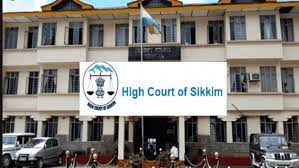
It is entirely in the fitness of things that the Sikkim High Court at Gangtok in a most learned, laudable, landmark, logical and latest oral judgment titled Rabden Sherpa vs State of Sikkim in W.P. (C) No. 07 of 2026 that was head and pronounced on 07.04.2026 and then finally uploaded on 09.04.2025 while granting relief to Sikkim Chronicle deemed it fit to dismiss a plea seeking the removal of an FIR-based news report that named the petitioner and his minor son. It was held that publication by Sikkim Chronicle of the accused’s name and the contents of the FIR, based on public records does not violate the right to privacy, while underscoring that the press functions as the “fourth pillar of democracy” and a “watchdog” of society. To put it differently, it was held clearly that there is no legal prohibition on the media disclosing the name of an accused person while reporting on a First Information Report (FIR), holding that fair and accurate crime reporting does not amount to a “media trial”. It must be noted that the Single Judge Bench comprising of Hon’ble Mr Justice Bhaskar Raj Pathan who authored this most commendable judgment was hearing the plea that had been filed by a man accused in a criminal case, who had challenged the publication of an FIR report by Sikkim Chronicle and sought protection of his and his minor son’s identity.
At the very outset, this robust, remarkable, rational and recent judgment authored by the Single Judge Bench comprising of Hon’ble Mr Justice Bhaskar Raj Pathan of Sikkim High Court at Gangtok sets the ball in motion by first and foremost putting forth in para 1 that, “The petitioner who is being investigated under the Bharatiya Nayaya Sanhita, 2023 (BNS) desires to raise an issue of privacy in his favour. The State Police has registered a First Information Report (FIR) on 11.02.2026 against him involving various offences under sections 68, 75, 64, 351 of the BNS.”
To put things in perspective, the Bench while elaborating on the factual background states in para 2 that, “According to the petitioner, the fourth respondent i.e. Sikkim Chronicle published a news report regarding the registration of the FIR against the petitioner. According to the said report it was based on the Police Daily Situation Report. Therefore, the petition impugned the alleged action of the State Police in disclosing the petitioner’s name and the contents of the FIR to Sikkim Chronicle. The petitioner seeks a direction upon the State respondents not to disclose investigative material relating to the petitioner to the media or any third party during the pendency of the investigation. The petitioner also prays that the Sikkim Chronicle be directed to remove all publications relating to the FIR naming him and his minor son and restrain Sikkim Chronicle from further publishing prejudicial, accusatory, or investigative content concerning the petitioner during the pendency of investigation and trial. Consequently, the petitioner prays for a direction for appropriate inquiry into unauthorised disclosure of police investigative material to media and fix responsibility upon the concerned officials. The petitioner further seeks the protection of the identity, privacy and dignity of the petitioner’s minor child and restraining order that no further disclosure identifying the minor be passed.”
As it turned out, the Bench enunciates in para 3 that, “At the preliminary hearing on perusal of the pleadings and the materials filed by the petitioner, this Court was of the view that it did not call for issuing notice upon Sikkim Chronicle at that stage. The matter was thereafter listed today.”
Do note, the Bench notes in para 13 that, “The learned counsel for the petitioner has also not been able to point out any law which mandates non disclosure of the name of an accused person or the contents of the FIR against him. In fact in my understanding the argument opposes the judgment of the Supreme Court relied upon by him in the matter of Youth Bar Association of India (Supra). If what the learned Counsel argues before this Court is to be upheld then the direction to upload the FIR in public websites given by the Supreme Court would be otiose. Therefore, I am not in agreement with the learned counsel’s submissions.”
Do further note, the Bench then notes in para 14 that, “The petition seeks to allege that Sikkim Chronicle has resorted to media trial. I am of the view that simply reporting the factum of registration of an FIR against the petitioner and the contents thereof does not amount to media trial.”
Truth be told, the Bench then concedes and observes in para 15 that, “It is true that an accused or an aggrieved person, who genuinely apprehends on the basis of the contents of any publication and its effect, and infringement of his rights under Article 21 to a fair trial and all that it comprehends, would be entitled to approach an appropriate writ court and seek an order of postponement of the offending publication/broadcast or postponement of reporting of certain phases of trial including identity of the victim or the witness or the complainant. (see Sahara India Real Estate Corporation Limited & Ors. vs. Securities and Exchange Board of India & Anr. (2012) 10 SCC 603). However, such a decision should be taken on the facts of each case. The facts as disclosed in the writ petition do not warrant such an action.”
It is worth noting that the Bench notes in para 17 that, “Another issue raised by the petitioner is the disclosure of the name of the petitioner’s son in the subsequent report published by Sikkim Chronicle. The petitioner states his son is a minor and therefore his identity should be protected. A perusal of the said report reflects that it is the verbatim extract of the contents of the communication addressed by the son of the accused person to Sikkim Chronicle. The said communication makes a request to consider presenting the clarification so that the public is informed of their side of the matter as well. The communication seems like a mature effort of the petitioner’s son to raise his father’s defence before the public. It was therefore, the desire and the request of the petitioner’s son to place his side of the story to the public through Sikkim Chronicle. The said request was therefore, accepted by Sikkim Chronicle by publishing it as well.”
Most rationally, the Bench underscores in para 18 holding that, “The press and the media is the fourth pillar of democracy which should always be alert as a watch dog of our society. Reporting a crime is part of their duty. Fair and accurate reporting of the factum of lodging of the FIR against the accused person without disclosing the name and identity of the victim and judging the act alleged cannot be termed as “media trial” and thereafter seek sanctions against it.”
Most fundamentally, most significantly and so also most remarkably, the Bench encapsulates in para 19 what constitutes the cornerstone of this notable judgment postulating precisely that, “Article 19(1) (a) of the Constitution of India guarantees to all citizens the fundamental right to freedom of speech and expression. It permits individuals to express their thoughts, opinions and ideas. The fundamental freedoms includes and encompasses the freedom of the press. The freedom of press ensures a robust and informed citizenry. In fact it encourages the pursuit of truth. The right to freedom of speech and expression is however, not an absolute right and is subject to reasonable restrictions. I am of the view that this is not a case where reasonable restriction upon the press and media is required to be imposed. I find that the reportage by Sikkim Chronicle reporting both side of the story (i) the contents of the FIR and (ii) the letter of the son of the accused is a fair reportage well within their rights and duties. If the press and the media are doing their duty fairly and accurately I am also of the view that the Courts should restrain itself from dragging them into Courts on the mere asking.”
While citing a recent and relevant case law, the Bench observes in para 20 that, “In Harendra Rai vs. State of Bihar & Ors. (2023) 13 SCC 563 the Supreme Court held that it is an undisputed position of law that the FIR is a public document defined under section 74 of the Indian Evidence Act, 1872. The Supreme Court considered various decisions of the High Courts of Karnataka, Gujarat, Allahabad, Delhi as well as Chhattisgarh and concluded by endorsing the views of the High Court’s which held that the FIR is a public document defined under section 74 of the Indian Evidence Act, 1872. If therefore, FIR is a public document it can be procured by any person who has a right to inspect as was envisaged under the Indian Evidence Act, 1872 and now under the Bharatiya Saksha Adhiniyam, 2023 (BSA).”
Be it noted, the Bench notes in para 22 that, “Similarly, the publication by Sikkim Chronicle in the impugned reportages becomes unobjectionable as it is based upon public records. In such situation the right to privacy no longer subsists and it becomes a legitimate subject to comment by press and media among others. This however, is not to legitimise media trial.”
Finally, the Bench then concludes by directing and holding in para 23 that, “I am therefore, of the view that this writ petition does not need any further deliberation and can be dismissed at this stage itself. The writ petition is dismissed. Consequently, the interim application is also dismissed.”
In conclusion, it has been made indubitably clear by the Sikkim High Court that crime reporting is a part of media duty and no law prohibits disclosure of the name of an accused person. The plea of the petitioner was thus dismissed by the Sikkim High Court. Absolutely right! No denying it!
Sanjeev Sirohi