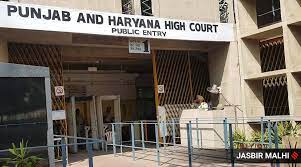
It warms the innermost cockles of my heart to note that the Punjab and Haryana High Court at Chandigarh in a most learned, laudable, landmark, logical and latest judgment titled Kulwant Singh vs State of Punjab in CWP-5302-2026 and cited in Neutral Citation No.: 2026:PHHC:048139 that was reserved on 05.03.2026 and then pronounced finally on 27.03.2026 has minced absolutely just no words to most laudably hold in no uncertain terms that the right to be considered for promotion is a fundamental right. It must be noted that the Single Judge Bench comprising of Hon’ble Mr Justice Harpreet Singh Brar directed that Departmental Promotion Committee (DPC) meetings, which decide promotions of government employees must be held every three months to ensure timely career progression. The Bench was most unequivocal in holding that, “Right to be considered for promotion is a fundamental right under Article 14 and 16(1) of the Constitution. Delay in convening the DPC not only causes financial loss to the concerned officers on account of delayed promotion to the next higher grade, but also adversely impacts their future career progression, as it correspondingly postpones their eligibility for further advancement.”
We need to note that the Chandigarh High Court made this key observation while allowing a plea that had been filed by a junior engineer Kulwant Singh with the Municipal Corporation of Amritsar who sought promotion to the post of Assistant Corporation Engineer. The Court asked the authorities to pass the necessary order within three weeks. It also must be noted that the Chandigarh High Court said that the State has the obligation to hold Departmental Promotion Committee Meetings on a quarterly basis.
At the very outset, this brief, brilliant, bold and balanced judgment authored by the Single Judge Bench comprising of Hon’ble Mr Justice Harpreet Singh Brar of Punjab and Haryana High Court at Chandigarh sets the ball in motion by first and foremost putting forth precisely in para 1 that, “The present writ petition has been filed under Articles 226/227 of the Constitution of India for the issuance of a writ in the nature of mandamus directing the respondents to promote the petitioner to the post of Assistant Corporation Engineer (O&M) (Civil) being fully eligible as per the Punjab Municipal Corporation Services (Recruitment and conditions of service) (Amendment) Rules, 2020. It is further prayed that directions be issued to the respondents to convene the Departmental Promotion Committee meeting as a number of posts of Assistant Corporation Engineer (O&M) (Civil) are lying vacant.”
To put things in perspective, the Bench then envisages in para 2 that, “Learned counsel for the petitioner inter alia contended that the petitioner was appointed as Tubewell Driver in the Punjab Water Supply and Sewerage Board in the year 1995. In the year 1996, the services of the petitioner were transferred to the Municipal Corporation, Amritsar. Subsequently, in the year 2011, the services of the petitioner were regularized w.e.f. 01.01.1996 and all past benefits i.e., difference of pay and annual increment were also granted in compliance with the order passed by this Court. Thereafter, the petitioner was promoted to the post of Junior Engineer (O&M) (Civil) vide order dated 03.01.2017 (Annexure P-1) on probation period of one year. Since the services of the petitioner were upto the mark and there was no complaint against him, his probation period was successfully completed and he was confirmed vide order dated 31.12.2018 (Annexure P-2) to the post of Junior Engineer (O&M) (Civil).”
Do note, the Bench notes in para 3 that, “Learned counsel further contended that in the year 2020, the Government of Punjab, Department of Local Government issued the tentative seniority list of Junior Engineers (O&M) (Civil) (Annexure P-3), wherein the petitioner was placed at Sr. No.2. It was submitted that Sh. Nandan Bansal, who was placed at Sr. No.1, has already been promoted to the post of Assistant Corporation Engineer (O&M) (Civil) and, therefore, the petitioner is currently the senior-most Junior Engineer (O&M) (Civil).”
Needless to say, the Bench then states in para 10 that, “I have heard the learned counsel for the parties and have perused the record with their able assistance. Admittedly, the petitioner was promoted to the post of Junior Engineer (O&M) (Civil) vide order dated 03.01.2017 (Annexure P-1) on probation period of one year. He was confirmed on the said post vide order dated 31.12.2018 (Annexure P-2).”
As it turned out, the Bench enunciates in para 12 that, “Although the aforementioned provision prescribes the requirement of a Diploma in Civil Engineering along with seven years experience, the Proviso expressly states that employees who are already members of the service of Junior Engineer (O&M) (Civil) shall be entitled for promotion notwithstanding the absence of such educational qualifications. As per Rule 1 of the 2020 Amendment Rules, the amendment came into force from the date of its publication in the Official Gazette, i.e., 15.09.2020. Accordingly, by virtue of the aforesaid Proviso, those employees, who were already working as Junior Engineer (O&M) (Civil) before the coming into force of the 2020 Amendment Rules, shall be entitled to be considered for promotion to the post of Assistant Corporation Engineer (O&M) (Civil) notwithstanding the fact that they do not have the requisite educational qualification, i.e., a Diploma in Civil Engineering.”
Be it noted, the Bench notes in para 13 that, “This Court is of the considered view that the petitioner squarely falls within the ambit of the aforesaid proviso, since he was already working as a Junior Engineer (O&M) (Civil) at the time the 2020 Amendment Rules came into force. Consequently, even if the petitioner’s diploma obtained through part-time/distance mode is neither valid nor recognized, the same is not a prerequisite for his consideration for promotion to the post of Assistant Corporation Engineer (O&M) (Civil). Admittedly, the petitioner completed seven years of service as a Junior Engineer on 02.01.2024 and was, therefore, fully eligible for promotion in terms of the 2020 Amendment Rules.”
It is worth noting that the Bench while citing the relevant case law notes in para 14 that, “Accordingly, this Court concludes that the respondent-corporation has misinterpreted the 2020 Amendment Rules and were wrong in stating that the petitioner is not eligible for promotion to the post of Assistant Corporation Engineer (O&M) (Civil). Furthermore, it is settled law that DPCs must be held regularly and timely to ensure promotions and career progression of eligible employees and to avoid stagnation. The employees cannot be made to suffer for the fault of the employer in holding DPCs in a delayed manner. Reliance in this regard can be placed on the judgment of the Delhi High Court in Parvez Ahmed v. Govt of NCT of Delhi, 2024 NCDHC 9530, wherein the Court, while relying on the two-Judge Bench Judgment of the Hon’ble Supreme Court in Union of India v. N.R. Banerjee, 1997(9) SCC 287, has observed as follows:
“9. The Supreme Court in Union of India and Others v. N.R. Banerjee and Others, (1997) 9 SCC 287, has echoed the importance of holding of DPCs at regular annual intervals preferably, if necessary, on a fixed date in a year and I may quote the relevant para hereunder:-
“6. DPCs should be convened every year, if necessary, on a fixed date, i.e. 1st of April or May. In the middle of the para, by way of amendment brought on 13-5- 1995, it postulates that very often action for holding DPC meeting is initiated after the vacancy has arisen. This results in undue delay in filling up of vacancies and causes dissatisfaction among those who are eligible for promotion. It may be indicated that regular meeting of DPC should be held every year for each category of posts so that approved select panel is available in advance for making promotions against vacancies arising every year. Under para 3.2, the requirement of convening annual meetings of the DPC should be dispensed with only after a certificate has been issued by the appointing authority that there are no vacancies to be filled by promotion or no officers are due for confirmation during the year in question. It would, thus, be seen that DPCs are required to sit every year, regularly on or before 1st April or 1st May of the year to fill up the vacancies likely to arise in the year for being filled up. The required material should be collected in advance and merit list finalised by the appointing authorities and placed before the DPCs for consideration. This requirement can be dispensed with only after a certificate is issued by the appointing authority that there are no vacancies to be filled by promotion, or that no officers are due for confirmation, during the year in question.”
10. From the aforementioned judgment of the Supreme Court, which has been subsequently followed in several other judgments, as well as from a reading of the DoPT O.Ms., some of which have been alluded to above, there is no gainsaying that it is imperative that DPCs are convened at regular intervals so that the employees, who are in the zone of consideration and eligible, do not stagnate for want of consideration for promotion and at the same time, the functioning of the Government is not adversely impacted.” (Emphasis added).”
Most significantly, the Bench encapsulates in para 16 what constitutes the cornerstone of this notable judgment postulating precisely that, “This Court does not find merit in the argument of the learned counsel for the respondents that the instructions dated 08.05.2017 (Annexure P-6) are merely directory in nature. As noted above, DPCs must be held regularly to ensure career progression and avoid stagnation. Right to be considered for promotion is a fundamental right under Article 14 and 16(1) of the Constitution. Delay in convening the DPC not only causes financial loss to the concerned officers on account of delayed promotion to the next higher grade, but also adversely impacts their future career progression, as it correspondingly postpones their eligibility for further advancement. Therefore, the respondents are mandated to hold DPCs every three months (quarterly) during every calendar year so that employees can get promotions against vacant posts in time.”
As a corollary, the Bench then directs and holds in para 17 that, “In view of the foregoing discussion, the present writ petition is allowed. The respondents are directed to grant the petitioner notional promotion to the post of Assistant Corporation Engineer (O&M) (Civil), along with all consequential benefits, with effect from the date he completed seven years of service as a Junior Engineer (O&M) (Civil), i.e., 02.01.2024. Nothing has been brought on record to show that the petitioner does not fulfill the eligibility criteria/benchmark for promotion to the aforesaid post. An appropriate order to this effect shall be passed within a period of three weeks from the date of receipt of a certified copy of this order.”
Further, it would be instructive to note that the Bench hastens to add in para 18 noting that, “The respondents are further directed to convene a DPC meeting within a period of three weeks from the date of receipt of a certified copy of this order to fill any remaining vacant posts. Going forward, as observed hereinabove, the respondents are mandated to hold DPCs on a quarterly basis (every three months) during each calendar year, in strict compliance with the instructions dated 08.05.2017 (Annexure P-6).”
Finally, the Bench then aptly concludes by directing and holding in para 19 that, “Pending miscellaneous applications, if any, shall also stand disposed of.”
In a nutshell, we thus see that the Punjab and Haryana High Court at Chandigarh has held that the right to be considered for promotion is a fundamental right and has underscored that delays in promotion processes can harm both earnings and long-term career progression. The Single Judge Bench comprising of Hon’ble Mr Justice Harpreet Singh Brar held so while hearing a plea that had been filed by a junior engineer seeking promotion within the Municipal Corporation of Amritsar. No doubt, this progressive, pragmatic, pertinent and persuasive judgment offers stronger legal backing to challenge stalled promotions and for administrators, it signals the dire need for more structured and time-bound promotion systems. It has to be conceded that this most commendable judgment reinforces a critical principle to be followed in public employment – that promotion processes must be timely, transparent and non-discriminatory. This robust judgment has also made it indubitably clear that employees can’t be made to suffer for the fault of employer. No denying or disputing it!
Sanjeev Sirohi