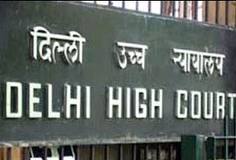
While leaving not even an iota of doubt to linger in mind of anyone in underscoring on the paramount importance of hygienic environment in the life of a person, the Delhi High Court in a most learned, laudable, landmark, logical and latest oral judgment titled Rachit Gupta vs Government of NCT of Delhi and Ors in W.P.(C) 13633/2024 & CM APPL. 57027/2024 and cited in Neutral Citation No. : 2026 : DHC : 1483 that was pronounced as recently as on February 16, 2026 has minced absolutely just no words to hold in no uncertain terms that the presence of an open garbage bin and a public urinal in a residential area violates the residents’ right to life. It must be laid bare that the Single Judge Bench comprising of Hon’ble Mr Justice Amit Bansal who authored this notable judgment directed the Municipal Corporation of Delhi (MCD) to remove the same within four weeks stating most explicitly that, “One of the integral aspects of a healthy life is hygienic environment. Absence of a healthy environment would frustrate the right of the petitioner to live with dignity. The presence of a public urinal and an open garbage bin next to the petitioner’s house clearly violates his right to life guaranteed under Article 21 of the Constitution, which includes right to live with dignity in a clean and healthy environment.” It is worth paying singular attention that the Delhi High Court in this leading case has directed the Municipal Corporation of Delhi (MCD) to demolish the garbage bin and public urinal from the residential area and so also has directed to set up proper waste collection facilities. Very rightly so! No denying or disputing it!
At the very outset, this brief, brilliant, bold and balanced judgment authored by the Single Judge Bench comprising of Hon’ble Mr Justice Amit Bansal of the Delhi High Court sets the ball in motion by first and foremost putting forth in para 1 while stating the purpose of the petition stating that, “The present writ petition has been filed seeking the following reliefs:
1. A writ, order or directions in the nature of Mandamus do issue commanding the Respondent no. 2 for demolition of unauthorized Kudadaan and urinal constructed on the eastern walls of 3148, Lal Darwaza, Bazar Sita Ram, Delhi – 06;
2. A writ, order or directions in the nature of Mandamus do issue commanding respondent no. 2 to arrange proper covered dustbins for dry and wet waste for house no. 3148, Lal Darwaza, Bazar Sita Ram, Delhi – 06 and on the streets of Lal Darwaza;
3. A writ, order or directions in the nature of Mandamus do issue commanding respondent no. 2 daily proper cleaning of the garbage outside the property 3148, Lal Darwaza, Bazar Sita Ram, Delhi – 06 and on the streets of Lal Darwaza;
4. A writ, order or directions in the nature of Mandamus do issue commanding respondent no. 2 Health Inspector be deployed to challan the person who throw garbage outside property 3148, Lal Darwaza, Bazar Sita Ram, Delhi – 06 and on the streets of Lal Darwaza;
5. A writ, order or directions in the nature of Mandamus do issue commanding both respondent no. 1 & 3 to take steps to maintain proper hygiene by pest-control and plantation outside property 3148, Lal Darwaza, Bazar Sita Ram, Delhi – 06 and on the streets of Lal Darwaza;
6. Any other appropriate directions or writs may be issued in favour of the petitioner and against Respondents which may deem fit and equitable in the present conditions.”
As we see, the Bench then states in para 2 that, “The petitioner, who is an Advocate appears in person and submits that he resides at House No.3148, Lal Darwaza Bazar, Sita Ram Bazar, Delhi-110006.”
To put things in perspective, the Bench envisages in para 3 while elaborating on the facts of the case stating that, “The grievance of the petitioner is that the respondents have constructed an unauthorised open garbage bin and urinal on the eastern walls of the property of the petitioner, in which about 150 residents in the neighbourhood of the petitioner throws their garbage and waste and also use the urinal. Photographs of the same have been filed along with the writ petition (Annexure-D of the petition).”
As it turned out, the Bench enunciates in para 4 that, “It is averred on behalf of the petitioner that the petitioner made several requests before the officials of the respondent authorities to maintain sanitary conditions in and around the open garbage bin and the public urinal. Till date, no action has been taken in this regard.”
Do note, the Bench notes in para 5 that, “The status report has been filed on behalf of the respondent no.2/MCD that regular inspection and cleaning work is being carried out in the urinal in question by the officials of the respondent no.2/MCD.”
Do further note, the Bench then notes in para 6 that, “In terms of the order passed by this Court on 7th August, 2025, a joint inspection was carried out to remove/relocate the open garbage bin and urinal. However, the site proposed by the petitioner was not found feasible.”
As things stands, the Bench then points out in para 7 observing that, “In the rejoinder filed on behalf of the petitioner, it is stated that the area in question is residential and all residents are expected to have toilet in their own houses, therefore, there is no requirement for public urinal. Further, insofar as the open garbage bin is concerned, in terms of the Solid Waste Management Rules, the respondent no.2/MCD is required to collect garbage from the house of the residents.”
Needless to say, the Bench then states in para 8 that, “I have heard the counsel for the parties.”
Most forthrightly, the Bench propounds in para 9 holding succinctly that, “In my considered view, the presence of open garbage bin as well as public urinal is undoubtedly a nuisance to the residents of the area including the petitioner, outside whose house the same is located. This Court empathises with the petitioner as well as other residents inasmuch as presence of a public urinal as well as an open garbage bin would result in stench in the surrounding areas. The residents of the aforesaid locality have been constrained to live in such a deplorable condition. The photographs filed with the petition clearly demonstrate the existing state of affairs.”
Most significantly and most remarkably, the Bench encapsulates in para 10 what constitutes the cornerstone of this notable judgment postulating precisely that, “One of the integral aspects of a healthy life is hygienic environment. Absence of a healthy environment would frustrate the right of the petitioner to live with dignity. The presence of a public urinal and an open garbage bin right next to the petitioner’s house clearly violates his right to life guaranteed under Article 21 of the Constitution, which includes right to live with dignity in a clean and healthy environment [Please see State of M.P. v. Kedia Leather & Liquor Ltd. (2003) 7 SCC 389 and Chameli Singh v. State of U.P. (1996) 2 SCC 549].”
As a corollary, we see that the Bench then directs and holds in para 11 that, “In view thereof, a direction is issued to the respondent no.2/MCD to forthwith demolish the open dustbin and the urinal next to the house of the petitioner at House No.3148, Lal Darwaza Bazar, Sita Ram Bazar, Delhi-110006 within four (4) weeks from today.”
It is worth noting that the Bench then hastens to add in para 12 directing concisely that, “Further direction is issued to the respondent no.2/MCD to arrange proper covered dustbin for dry and wet waste to be kept at a distance from the petitioner’s property.”
Finally, we see that the Bench then concludes aptly by directing and holding in para 13 that, “The writ petition stands disposed of with the abovesaid directions.”
Sanjeev Sirohi