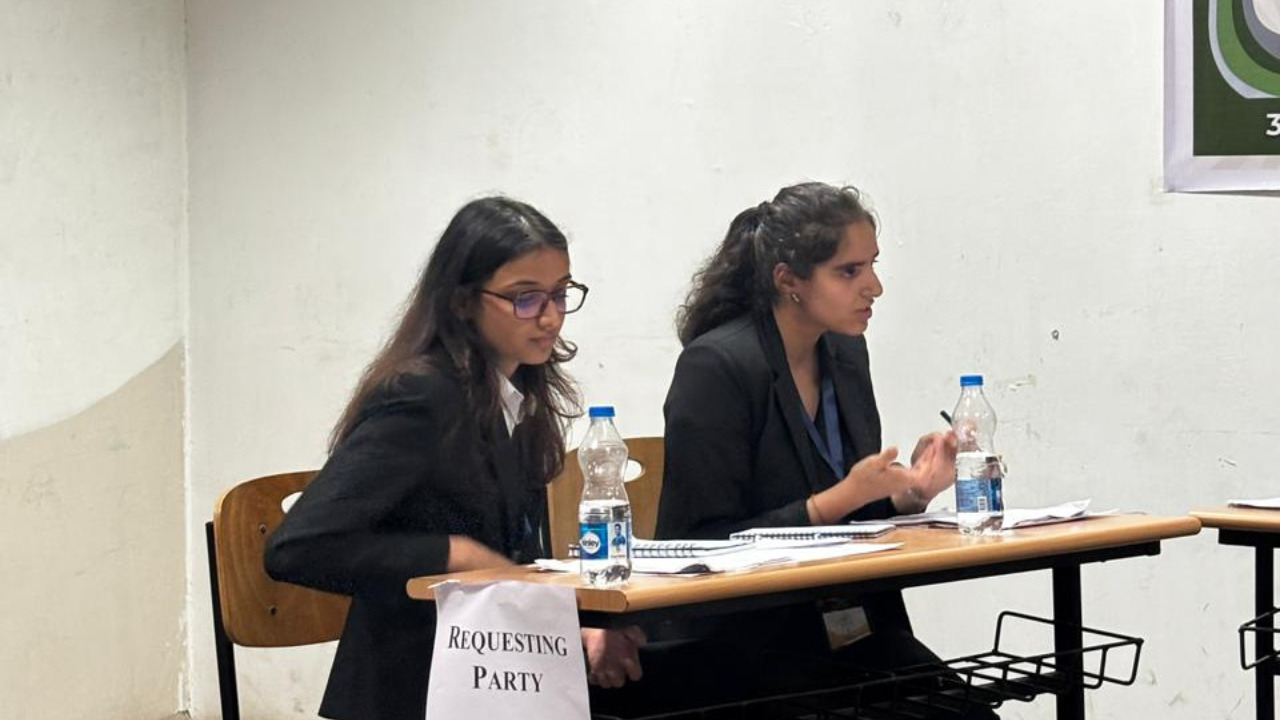
The National Law Institute University, Bhopal (NLIU) has achieved a significant milestone by securing the Winner Client-Counsel Pair title at the 7th Annual Legal Services Forum (LSF) – 3rd Mediation Competition 2026 organised by Gujarat National Law University (GNLU).
NLIU Students Secure Top Position
Ms. Jiya Gulati and Ms. Vismaya Tulsian represented NLIU Bhopal and were adjudged the Winner Client-Counsel Pair. Their performance reflected a high level of competence in mediation advocacy, negotiation strategy, and effective client representation. Competing against participants from leading law schools across the country, the team distinguished itself through clarity of thought and practical legal application.
Theme Focus: AI, Development and Access to Justice
The competition was centred around the contemporary theme of “AI, Development and Access to Justice,” capturing the evolving interface between law and technology. The mediation problems were thoughtfully designed to integrate traditional legal principles with emerging issues relating to artificial intelligence, thereby encouraging participants to engage with modern challenges affecting access to justice systems.
Excellence in Mediation and Legal Strategy
The NLIU team demonstrated exceptional proficiency in handling complex disputes through structured negotiation and client-centric approaches. Their ability to combine legal reasoning with persuasive communication and strategic thinking played a crucial role in their success at the competition.
Institutional Achievement
This accomplishment highlights the academic rigour and practical training environment at NLIU Bhopal, particularly in the field of alternative dispute resolution. The university administration and the Student Bar Association have extended their congratulations to the winners, acknowledging their dedication and achievement.
Conclusion
The success of NLIU Bhopal at the GNLU Mediation Competition 2026 underscores the increasing importance of mediation and ADR mechanisms in contemporary legal practice. It also reflects the preparedness of law students to engage with technology-driven legal issues and contribute meaningfully to the future of dispute resolution.