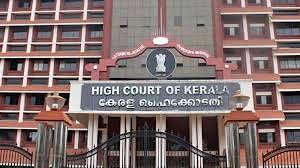
Nothing on earth can ever give me so much of happiness than this that none other than the Kerala High Court itself in a most commendable, courageous, cogent and creditworthy judgment titled Sanil Narayanan Nampoothiri v State of Kerala & Ors in WP (C) No. 43218 of 2023 and cited in Neutral Citation No.: 2026:KER:7100 that was pronounced just recently on January 30, 2026 has dismissed a plea challenging the entry of two Christian priests into the Adoor Sree Parthasarathy Temple in Pathanamthitta district in 2023 alleging that it violated the Kerala Hindu Places of Public Worship (Authorisation of Entry) Act, 1965. It merits mentioning that the Kerala High Court while most commendably calling for review of rule imposing blanket ban on non-Hindus in temples has minced absolutely just no words in holding most unequivocally that the rule prohibiting non-Hindus from entering Hindu temples may require reconsideration in tune with the changing times and constitutional principles. We need to pay attention that in this leading case, the plea had been filed by a devotee named Sanil NarayananNampoothiri who is a teacher from Kulanada and who also sought directions from the Kerala High Court to the Travancore Devaswom Board (TDB) and the temple authorities to prevent the entry of non-Hindus into the shrine of Sree Parthasarathy temple in Adoor after two priests entered the temple in 2023 upon an invitation.
It must be borne in mind that the Division Bench of Kerala High Court comprising of Hon’ble Mr Justice Raja Vijayaraghavan V and Hon’ble Mr Justice KV Jayakumar cautioned that laws governing religious spaces should not become sources of social discord or disharmony. To put it differently, we thus see that the Division Bench was most forthcoming in holding most unequivocally that, “Statutes, rules and regulations ought not to be permitted to become instruments for fomenting discord or disharmony between different religions, castes, sub-castes or communities.” No denying or disputing it!
Quite significantly, we see that the Kerala High Court left it open to the State Government to reconsider Rule 3(a) of the Kerala Hindu Places of Public Worship (Authorisation of Entry) Rules, 1965, which currently bars non-Hindus from temple entry. In my own personal life, it was a Muslim named Sageer Khan in Makronia locality in Sagar in Madhya Pradesh for two years from April 1993 to April 1995 who inculcated in me habit of praying in temples and regularly accompanied me to temple of Lord Hanuman and Devi Durga in Mandir Marg in Civil Lines and the dedication with which he worshipped with me by not just folding hands but also bowing, and not only just bowing but also touching and shaking nose on ground first while entering temple of Lord Hanuman and then again in front of idol of Lord Hanuman same process and doing parikrama and again same process and then in adjoining Devi Durga temple and again same process and lighting Agarbatti and other necessary rituals and again same process of folding hands, bending, touching nose on ground and then shaking nose on ground while leaving temple of Lord Hanuman and Devi Durga which deepened my faith in both even though I worshipped only Mahadev in home right since childhood days till 1992 and when I lost faith in idol worship and wanted to become Muslim in 1994 like Sageer Khan, it was Sageer Khan who ingrained in me that Hinduism is best religion in world, Hindus are most tolerant in the world who so quietly accepted abolition of polygamy and polyandry in 1955 enjoyed by Hindus and related religions since time immemorial and if Shri Ram temple is not built in Ayodhya then should it be built in Mecca or Medina and there should not be even a single mosque ever in Ayodhya or Kashi or Mathura yet Hindus never object to so many mosques built all over and Hinduism is oldest religion in world and you should be proud that you are Hindu just like I am proud that I am Muslim and took oath from me with my hands on his head with tears in his eyes that “Say on my oath that you shall never renounce Hinduism nor Mahadev Baba just like I will never renounce Islam nor Allah” which I had to give and said explicitly that , “Religion like you are Hindu and I am a Muslim and God whom you call Mahadev and I call Allah are different paths to reach the same goal and we should never renounce the path which God has chosen for us by which you was born as a Hindu and I was born as a Muslim till we die!” What sense does it make to ban non-Hindus from entering temple or banning non-Muslims from entering mosques?
At the very outset, this most learned judgment authored by Hon’ble Mr Justice KV Jayakumar for a Division Bench of the Kerala High Court comprising of Hon’ble Mr Justice Raja Vijayaraghavan V and himself sets the ball in motion by first and foremost putting forth in para 1 that, “ “Matru Devo Bhava Pitru Devo Bhava, Acharya Devo Bhava, Atithi Devo Bhava.”
‘These injunctions are given by a teacher to students at the completion of their Vedic education and comes specifically from the Taittirīya Upaniṣad, which is a part of the Taittirīya Āraṇyaka of the Krishna Yajurveda. The above verse signifies that mother, father, teacher, and guest are equivalent to God and are to be treated with respect and honour.’
This Writ Petition is filed under Article 226 of the Constitution of India, by the petitioner, Sri. Sanil Narayanan Nampoothiri, who is a teacher by profession. The petitioner states that he is a devotee of Adoor Sree Parthasarathy Temple, which is under the management of the Travancore Devaswom Board.”
To put things in perspective, the Division Bench enunciates in para 2 that, “The petitioner states that on 07.09.2023, two Christian priests, Dr. Zacharias Mar Aprem and another priest, were invited to the temple to attend a function in connection with the Sreekrishna Jayanthi celebration. They attended the public meeting held inside the temple compound. The petitioner further states that, after the public meeting, the Sub Group Officer and the members of the Temple Advisory Committee took the said Christian priests inside the temple, and certain gifts were presented at a function conducted in front of the Sreekovil. The devotees present in the temple objected to the said act, pointing out that Christian priests are not permitted to enter the temple, particularly while wearing their priestly robes.”
While elaborating on the facts of the case, the Division Bench points out in para 3 that, “The petitioner states that non-Hindus are not permitted to enter Hindu temples. The petitioner further asserts that the temple authorities, including the Temple Advisory Committee, have ignored the protest of the devotees and permitted the entry of two priests in their priestly robes, violating the provisions of the Kerala Hindu Places of Public Worship (Authorisation of Entry) Act, 1965 (‘the Act’ for the sake of brevity) and the Kerala Hindu Places of Public Worship (Authorisation of Entry) Rules, 1965 (‘the Rules’ for the sake of brevity). In order to substantiate the contention, the petitioner has produced a copy of the news item published in Malayala Manorama Daily on 08.09.2023.”
It is worth noting that the Bench notes in para 38 that, “Coming to the facts of the instant case, it is evident that two Christian priests entered the temple premises and offered prayers not as members of the general public, but strictly in their capacity as invitees and guests. In other words, their entry into the temple was a permissive entry, expressly authorised by the Thanthri of the temple. It is well settled that the Thanthri occupies a pivotal and sacrosanct position in the temple hierarchy and is traditionally regarded as the spiritual custodian and ritual authority — often described as the father of the deity. An entry permitted by the Thanthri, in the capacity of an Athithi (guest) or a special invitee, is fundamentally distinct from an entry claimed as a matter of right. Such a permissive and ceremonial entry, in our considered view, cannot be construed as a violation of the provisions of the Act, the Rules framed thereunder, or the established rites, usages and customs governing the temple.”
Most significantly, most commendably, most remarkably and so also most forthrightly, the Bench encapsulates in para 39 what constitutes the cornerstone of this notable judgment postulating precisely that, “The very object and purpose of law is to secure social harmony and promote the welfare of citizens. Law is not static; it is dynamic and evolves with the changing needs and realities of society. As society advances and becomes more inclusive, statutory provisions and subordinate legislation must be interpreted in a manner that advances constitutional values and social cohesion. Statutes, rules and regulations ought not to be permitted to become instruments for fomenting discord or disharmony between different religions, castes, sub-castes or communities. On the contrary, the legal framework must function as a unifying force that fosters mutual respect and coexistence.”
It would be instructive to note that the Bench then hastens to add in para 40 noting that, “In the present case, there is no direct challenge to the constitutional validity of the provisions of the parent Act or the Rules. However, we have already noticed an apparent inconsistency between the provisions of the parent Act and Rule 3(a) of the Kerala Hindu Places of Public Worship (Authorisation of Entry) Rules, 1965. It is therefore for the Government to examine whether Rule 3(a) requires reconsideration, amendment or modification so as to bring it in consonance with the legislative intent and constitutional principles. Rule 13 of the Rules explicitly provides that questions relating to the interpretation of the Rules shall be referred to the Government and that the decision of the Government thereon shall be final. In view of the same, it is for the Government to consider whether Rule 3(a) should be retained in its present form or suitably amended, after due consultation with the Devaswom Board, Thanthris, religious scholars and other relevant stakeholders.”
As a corollary, the Division Bench then directs and holds in para 41 that, “In the light of the foregoing discussion and analysis, we are of the considered view that the reliefs sought in the Writ Petition cannot be granted. Accordingly, the Writ Petition is dismissed. There shall be no order as to costs.”
Finally and resultantly, the Division Bench then aptly concludes by directing and holding in para 42 that, “Before parting with this matter, we deem it appropriate to place on record our appreciation for the valuable assistance rendered by Sri. Krishnanunni, learned Senior Counsel, and Sri. Jacob P. Alex, learned counsel, who have made sincere and commendable efforts to place before this Court the relevant constitutional and statutory provisions as well as binding precedents of the Hon’ble Supreme Court, thereby enabling this Court to effectively and comprehensively adjudicate the legal issues that arose for consideration.”
Sanjeev Sirohi