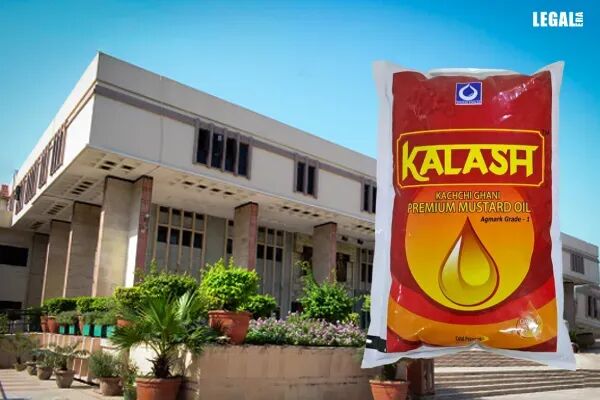
Delhi High Court Sets Aside Ex-Parte Injunction Against K.S. Oils’ ‘KALASH’ Mark, Cites CIRP Sale and Prior Trademark Rights
Introduction
The Delhi High Court set aside an ex-parte ad interim injunction that had restrained K.S. Oils Limited from using the “KALASH” trademark for edible oils. The Court held that the Trial Court failed to consider material documents evidencing prior use, assignment history, and subsisting statutory rights, particularly in the backdrop of the company’s sale as a going concern through CIRP.
Factual Background
The dispute concerns competing claims over the “KALASH” trademark used for edible oils. The respondent, Shivang Edibles Oils Limited, claimed continuous use since 2017 and relied on a fresh assignment deed dated 1 January 2026. Based on this claim, it secured an ex-parte injunction from the Trial Court on 4 February 2026 restraining K.S. Oils from using the mark.
K.S. Oils Limited, however, traced its rights in the mark back to 1975, relying on assignment deeds of 1986 and 1996, trademark applications filed in 2008, and trademark as well as copyright registrations obtained in 2009. It further contended that these rights formed part of its assets sold as a going concern in CIRP proceedings culminating in an NCLT-approved e-auction in 2025. Commercial production had resumed in October 2024, months before the institution of the suit.
Procedural Background
The Trial Court had granted an ex-parte ad interim injunction restraining use of the “KALASH” mark and ordered seizure of goods, holding that the plaintiff had made out a prima facie case of passing off. Aggrieved, K.S. Oils Limited challenged the order before the Delhi High Court.
Issues
1. Whether the Trial Court was justified in granting an ex-parte injunction without considering prior assignments and statutory registrations.
2. Whether the CIRP sale of the company as a going concern materially affected the trademark rights in dispute.
3. Whether the injunction application required fresh consideration after completion of pleadings.
Contentions of the Parties
The appellant argued that its rights in “KALASH” were longstanding, supported by historical assignment deeds, trademark applications of 2008, and registrations of 2009. It contended that these rights continued as part of the assets transferred under the CIRP-approved sale and that production had resumed well before the suit was filed.
The respondent relied on its continuous use claim since 2017 and a fresh assignment deed dated 1 January 2026. It supported the ex-parte injunction on the basis of passing off and alleged enforceable goodwill in the mark.
Reasoning and Analysis
The High Court held that the Trial Court’s prima facie conclusion could not be sustained because material documents were ignored. In particular, the 2008 trademark applications and 2009 trademark and copyright registrations clearly indicated prior use and subsisting statutory rights in favour of the appellant. These documents were essential to the formation of a fair prima facie opinion and should have been considered before granting ex-parte relief.
The Court also found the timing significant. By the time the injunction was granted in February 2026, the appellant had already been sold as a going concern through CIRP, and production had restarted months earlier. In such circumstances, the Court observed that issuing short notice and hearing the appellant would have been more appropriate than granting immediate ex-parte restraint.
Further, the Bench noted that the respondent was aware of the insolvency proceedings in which “KALASH” had been reflected as a corporate asset, yet failed to disclose these facts in the plaint. This non-disclosure materially weakened the basis of the ex-parte order.
Decision
The High Court set aside the ex-parte ad interim injunction and directed the Trial Court to decide the injunction application afresh after completion of pleadings, preferably within one month.
The directions for seizure of goods were recalled, and K.S. Oils Limited was permitted to de-seal and sell its products, subject to maintaining audited monthly sales statements before the Trial Court until final disposal.
In this case the plaintiff was represented by Senior Advocates Sandeep Sethi and J. Sai Deepak with Advocates Yatin Chadha, Mayank Chadha, Kunal Khanna, Gurvinder Singh, Shreya Sethi, Krisna Gambhir, Kaulik Mitra, Dolly Luthra, Aashna Singh, Sanskriti Rastogi, Gaurika Chawla and R. Abhishek.
Meanwhile the defendant was represented by Senior Advocates Rajiv Nayyar and Rajshekhar Rao with Advocates Neeraj Grover, Arjun Mahajan, Sumit R. Sharma, Shreyas Maheshwari, Ajay Sabharwal, Raghvendra N. Budholia, Sagar Agarwal, Piyush Gautam, Harshit Kapoor, Manav Singh, Siddhant Bajaj, Aryan Verma and Bhavya Arora.