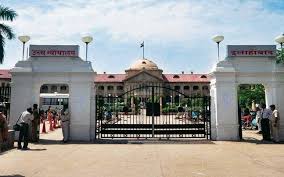
It is a matter of great respite that after a long spell of time, we finally see that the Allahabad High Court has cracked the whip and in a most learned, laudable, landmark, logical and latest judgment titled Sandeep Audichya vs State of UP and Others in Criminal Misc. Writ Petition No. – 1332 of 2026 and cited in Neutral Citation No.: 2026:AHC:47174-DB that was pronounced as recently as on March 9, 2026 has struck the right chord by advising Judicial Magistrates to make a reference for initiating contempt of court proceedings if they face any intimidation from police officers. For the uninitiated, it must be apprised and laid bare that a Division Bench of Allahabad High Court comprising of Hon’ble Mr Justice JJ Munir and so also Hon’ble Mr Justice Vinai Kumar Dwivedi acknowledged candidly that the Magistrates face pressure from the police when they pass any “uncomfortable” directions to them. There can be thus just no gainsaying that this browbeating of Magistrates by the police must be given forthwith a complete full stop by initiating contempt of court proceedings against them.
At the very outset, this progressive, pertinent, persuasive and pragmatic judgment authored by a Division Bench of Allahabad High Court comprising of Hon’ble Mr Justice JJ Munir and so also Hon’ble Mr Justice Vinai Kumar Dwivedi sets the ball in motion by first and foremost putting forth in para 1 stating aptly that, “Heard Mr. Hanuman Prasad Mishra, learned Counsel for the petitioner and Mr. Jitendra Kumar Jaiswal, learned Additional Government Advocate appearing on behalf of the State.”
As we see, the Division Bench of Allahabad High Court then lays bare the purpose of the petition by stating in para 2 that, “The petitioner has come up with a prayer that his representation dated 19.08.2025, moved before the Superintendent of Police, Farrukhabad, be decided in a time-bound manner.”
To put things in perspective, the Division Bench envisages in para 3 of this robust judgment stating clearly that, “Prayers made by litigants and directions often issued by this Court to authorities to decide representations made by litigants have rendered this Court virtually powerless, where the authorities seem to think that all we can do under Article 226 of the Constitution is to ask them to decide cases or take decisions, instead of deciding the lis ourselves and passing orders. Quite apart, this leads to a deluge of writ petitions being instituted before this Court, where, we are not required to decide anything. This writ petition is an instance of the same kind.”
As it turned out, the Division Bench enunciates in para 4 of this creditworthy judgment that, “Under sub-Section (4) of Section 173 of the Bharatiya Nagarik Suraksha Sanhita, 2023 (‘BNSS’ for short), if the officer-in-charge of a police station refuses to record an information relating to the commission of a cognisable offence, it is open to the informant to send substance of the information in writing and by post to the Superintendent of Police concerned, who is obliged, upon receipt of such information, if it discloses the commission of a cognisable offence, either to investigate the offence himself/herself or direct investigation to be undertaken by any police officer subordinate to him in the manner prescribed under the BNSS. If the S.P. is also derelict in the sense that he/she does not pass orders on an application under Section 173 BNSS, the remedy is before the Judicial Magistrate under sub-Section (3) of Section 175 BNSS. The Judicial Magistrate, if moved through an application supported by an affidavit under sub-Section (4) Section 173 BNSS, after making such inquiry, as he/she thinks necessary and submission of a report by the police officer in the matter, may order investigation by the Police. In the circumstances, the remedy of the petitioner is to move the Judicial Magistrate concerned through an application under Section 174(3) BNSS.”
Most significantly, most rationally, most forthrightly and so also most commendably, the Division Bench then encapsulates in para 5 of this pragmatic judgment what constitutes the cornerstone of this progressive, persuasive and pertinent judgment postulating precisely that, “We are aware of the fact that in the districts, applications, sometimes, not always, made to Magistrates, which direct investigations to be made by the Police, particularly uncomfortable ones, lead to frowns by what are called “superior officers of the Police”, who resort to measures to browbeat Magistrates. If that happens or has happened in a particular case is no ground for a litigant not to move the Magistrate in the exercise of his jurisdiction under Section 175(3) BNSS to direct the Police to investigate a case. The Magistrate also should not feel hesitant in passing necessary orders, merely because at some point of time, a high-handed police officer has caused some inconvenience to the Magistrate. If, in fact, any kind of embarrassment or pressure from any police officer is faced by the Magistrate, it is always open to him/her to make a contempt reference to this Court.”
As a corollary, it is worth noting that the Bench notes in para 6 that, “In this view of the matter, so far as this petition is concerned, in the face of a statutory alternative remedy, there is absolutely no warrant for this Court to interfere.”
Resultantly, it would be worthwhile to note that the Division Bench then notes in para 7 of this remarkable judgment that, “This petition is, accordingly, summarily dismissed, with the clarification that the petitioner shall have his remedy under the BNSS open to him to seek registration of the First Information Report by moving the competent Magistrate.”
Finally, we see that the Division Bench then draws the curtains of this enlightening judgment by directing and holding aptly in para 8 that, “The Registrar (Compliance) is directed to communicate this order to the Superintendent of Police, Farrukhabad and the Station House Officer, Police Station Kotwali, Farrukhabad, both through the learned Chief Judicial Magistrate, Farrukhabad.”
In a nutshell, there can be absolutely just no quibbling with the most irrefutable fact that the Judicial Magistrates in Uttar Pradesh must definitely pay heed to what the Allahabad High Court has advised to make a reference for initiating contempt of court proceedings if they face any intimidation from any police officers. To put it differently, the Allahabad High Court has underscored rightly in this brilliant judgment that there has to be indubitably zero tolerance for any intimidation by the police officers that they try to exert on the Judicial Magistrates who should make a reference for initiating contempt of court proceedings without wasting any time so that the guilty men or women in uniform are brought to book at the earliest as suggested so very commendably by the Allahabad High Court and no police officer ever dares to indulge in any kind of intimidation to the Judicial Magistrates in the future as interference in the smooth functioning of the Judges cannot be ever tolerated or taken for granted which sets a very bad precedent if the guilty men or women in uniform are not punished most promptly for what they dare did! There can be just no denying or disputing it!
Sanjeev Sirohi,