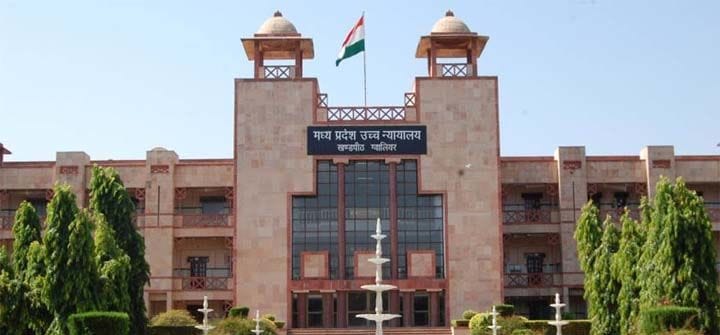
The Madhya Pradesh High Court has ordered the reinstatement of a police constable dismissed for failing to disclose two criminal cases in his recruitment form, observing that non-disclosure of cases ending in acquittal does not automatically disqualify a candidate from public employment.
The Madhya Pradesh High Court has quashed the dismissal of a police constable who was removed from service after more than a decade for not disclosing two criminal cases in his recruitment form, both of which had ended in acquittal.
Justice Vivek Kumar Singh, sitting at the Jabalpur Bench, allowed a writ petition filed by Nandkishore Lilhare and directed the State Government to reinstate him forthwith as a Constable. The Court described the decision to dismiss him as “manifestly arbitrary, disproportionate and unsustainable in the eyes of law.”
The judgment was delivered on October 28, 2026.
Background of the Case
The dispute originated from two criminal cases registered against Lilhare during his student days in Balaghat between 2000 and 2006.
The first case, registered as Crime No. 42/2003, ended in his acquittal in 2005. The second case, Crime No. 282/2006, arose out of a college dispute when he was serving as College President and concluded in 2008 with an acquittal based on a compromise. Both cases involved minor offences under the Indian Penal Code.
In January 2011, Lilhare applied for the post of Police Constable and answered “No” to questions concerning registered offences. However, in the Attestation Form submitted in March 2011, he answered “Yes” to questions regarding previous prosecution and acquittal, although he mentioned only a preventive proceeding.
Following verification, the local police authorities reported no other adverse information. He was subsequently appointed in May 2011 and continued serving for over ten years, receiving 119 rewards and only one minor censure during his service.
Department Initiates Action After Sub-Inspector Recruitment
The controversy resurfaced in 2017 when Lilhare cleared the Sub-Inspector recruitment examination. Although he disclosed both criminal cases in his application, the department declared him unsuitable for appointment, reasoning that an acquittal based on compromise could not be treated as an honourable acquittal.
While his challenge to that decision was pending before the High Court, the department initiated proceedings concerning the alleged non-disclosure in his 2011 recruitment form.
The proceedings eventually resulted in his dismissal from service on November 24, 2021.
The Deputy Inspector General, acting as the appellate authority, subsequently set aside the dismissal and imposed a lesser penalty. However, within seven days, the Additional Director General of Police initiated suo motu revisional proceedings and restored the dismissal order on April 4, 2022.
The Director General of Police also rejected Lilhare’s mercy appeal.
Arguments Before the High Court
Advocate Ayushi Tiwari, appearing for Lilhare, argued that both criminal cases had concluded in acquittal before he applied for the constable’s post. She submitted that his answers reflected a layman’s understanding of the questions and that there was no intention to deliberately conceal information or mislead the authorities.
It was further argued that the departmental proceedings were initiated to frustrate his pending challenge concerning his exclusion from the Sub-Inspector recruitment process.
On behalf of the State, Deputy Advocate General Shweta Yadav defended the departmental action, contending that suppression of relevant criminal antecedents rendered a candidate unsuitable under the applicable service rules.
The State also argued that an acquittal resulting from a compromise could not be considered a clean acquittal and that Lilhare had accepted the findings against him by not challenging the appellate authority’s decision.
High Court’s Observations
Rejecting the State’s submissions, the High Court relied on its earlier decision in Kailash Chandra Sirvi, which recognised that an acquittal cannot be disregarded merely because of the circumstances in which it was granted.
The Court held that treating Lilhare’s acquittals as a ground for declaring him unsuitable for police service was “wholly unsustainable in law.”
On the issue of non-disclosure, the Court relied on the Supreme Court’s judgment in Ravindra Kumar v. State of Uttar Pradesh, which clarified that suppression of information about a criminal case ending in acquittal does not automatically warrant disqualification from public employment.
The Supreme Court had observed that treating every instance of non-disclosure as an automatic disqualification would be unjust.
Applying these principles, the High Court noted several relevant circumstances:
- Lilhare was between 17 and 20 years old when the incidents occurred.
- Both cases involved minor offences and had ended in acquittal before his recruitment.
- No criminal case was pending against him when he applied for the constable’s post.
- His affirmative response regarding previous prosecution and acquittal in the Attestation Form had put the authorities on notice.
- His subsequent full disclosure of both cases in the 2017 Sub-Inspector application indicated an absence of deliberate fraudulent intent.
The Court also observed that the department’s own service record, which reflected 119 rewards against just one minor censure, contradicted the allegation that he was unsuitable for police service.
Describing the revisional proceedings as mechanical and arbitrary, the Court found no justification for restoring the dismissal after the appellate authority had already granted him relief.
The bench also rejected the State’s argument that Lilhare had accepted the finding against him by not challenging the lesser penalty. It observed that an employee’s decision to accept a reduced punishment to protect his livelihood does not take away his right to approach the High Court.
Dismissal Order Set Aside; Reinstatement Directed
Allowing the writ petition, the Madhya Pradesh High Court quashed the show-cause notice, the revisional order restoring Lilhare’s dismissal and the subsequent order passed by the Director General of Police.
The State was directed to reinstate Nandkishore Lilhare forthwith as Constable.
However, the Court clarified that he would not be entitled to back wages for the period during which he remained out of service. He would nevertheless receive continuity of service and all consequential notional benefits, including pay fixation, increments and seniority.
No order as to costs was passed.
Case Title: Nandkishore Lilhare v. State of Madhya Pradesh & Others
Court: Madhya Pradesh High Court, Jabalpur Bench
Bench: Justice Vivek Kumar Singh
Date of Judgment: October 28, 2026