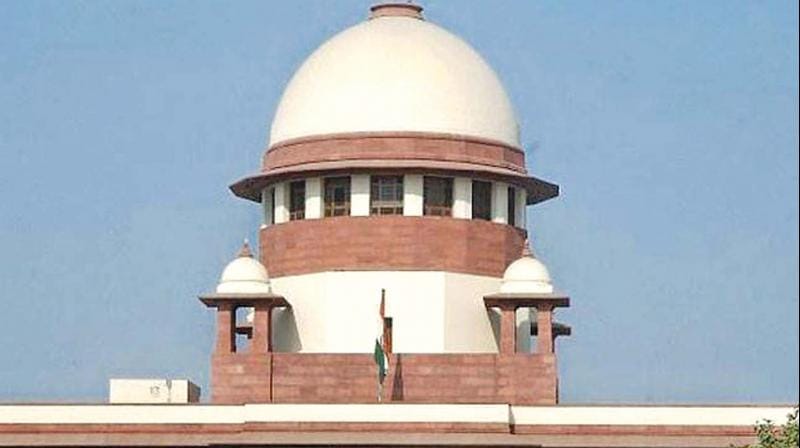
It is definitely in the fitness of things that the Supreme Court in a most learned, laudable, landmark, logical and latest judgment titled Shankar vs State of Rajasthan in Criminal Appeal of 2026 in(@Special Leave Petition (Crl.)No.13899 OF 2025) and cited in Neutral Citation No.: 2026 INSC 315 that was pronounced just recently on April 2, 2026 has upheld the life term of a man who killed his wife after being drunk by pouring kerosene over her, locking the room and setting her on fire. This leading case stemmed from an incident that occurred in October 2012 in Bundi district of Rajasthan. Neighbours and family members extinguished the fire and rushed her to the hospital where she recorded her dying declaration to a Magistrate before succumbing to her burn injuries four days later. We need to note that a Bench of Apex Court comprising of Hon’ble Mr Justice Sanjay Karol and Hon’ble Mr Justice Nongmeikapam Kotiswar Singh who authored this pragmatic judgment lamented that despite decades of legal reforms and economic advancement, patriarchy remains a daily reality in India where domestic abuse and violence against women persist as symptoms of a diseased social order.
It is high time that crimes against women are punished with mandatory death or mandatory life term without any remission which means in jail till death so that the right message percolates down the lane that any crime against women will be accorded the most strictest punishment with no scope for escaping after hiring top lawyers and coming out of jail in just few years even after throwing acid on women or committing gang rape among other heinous crimes or even after killing her and raping her which cannot be ever justified under any circumstances. There can be just no gainsaying that penal laws which have been amended recently needs to be amended further to ensure that perpetrators of heinous crimes against women don’t escape easily from death or mandatory life term and lead a comfortable life again after a gap of just few years which sends a very wrong message that one can get away easily even after committing most heinous crimes against women! For this to happen, it is Centre which has to take the initiative and bring forth a more stricter law and get it approved from Parliament as it brooks no more delay any longer now!
At the very outset, this brief, brilliant, bold and balanced judgment authored by Hon’ble Mr Justice Sanjay Karol for a Bench of Apex Court comprising of himself and Hon’ble Mr Justice Nongmeikapam Kotiswar Singh sets the ball in motion by first and foremost putting forth in para 2 that, “Shankar, the appellant was accused of having beaten up, poured kerosene over his wife – Sugna Bai, and killed her by setting her on fire. The Trial Court, Sessions Judge, Bundi, in Sessions Case No.249/2012 in terms of judgment dated 10.12.2014 sentenced him to life imprisonment under Section 302 and rigorous imprisonment for one year under Section 342, Indian Penal Code 1860 (IPC). Fines of Rs.1000/- each for both the offences was also imposed, and simple imprisonment for one month was indicated to be suffered by him in the event of default. Criminal Appeal No.65 of 2015 was dismissed by the learned Division Bench by judgment dated 20.08.2019. Shankar, now is before this Court, asking us to overturn his concurrent conviction.”
To put things in perspective, the Bench while elaborating on the factual background of the case envisages in para 3 that, “The facts, leading up to the position as indicated above was that the deceased had married the appellant about a month prior to her death on 19.10.2012 and within approximately 20 days the relationship had taken a sour turn on account of alleged excessive consumption of alcohol and the former possessing a violent streak. The deceased had apparently gone to her parental home when the appellant demanded that she return home immediately and make fresh food for him. While she was complying with such a demand, the appellant beat her up and, while doing so was allegedly drunk. Although she managed to free herself and move away, the appellant allegedly poured kerosene and threw a lit matchstick on her. Resultantly, she screamed causing the neighbours and those nearby including the appellant, to come to her aid. This included pouring water and also using blanket to quell the flame. Parents of the deceased who had, by this time, reached the scene of incident called the ambulance and she was taken to MBSH Hospital, Rajasthan for treatment.”
As it turned out, the Bench enunciates in para 6 that, “On appeal, the High Court found the view taken by the Trial Court to be entirely justified, including the reliance placed on the dying declaration of the deceased. As such, the conviction and sentence of the appellant was confirmed.”
Briefly stated, the Bench points out in para 10 that, “A perusal of the above extracted statement makes abundantly clear that nowhere did the officer state to the effect that the deceased not of sound mind. It is also evident that the duty doctor had given a certificate of her condition. PW-15 (Dr. Tez Pratap Singh) the duty doctor has testified that prior to giving the certificate on a blank paper he had examined the condition of the deceased. It stands to reason that, after the condition has been certified, only then, would the doctor record the statement on paper. The fact that it was on the flip side of the same paper does not affect the sanctity thereof. That being the case, we cannot appreciate the ground as raised by the appellant.”
Do note, the Bench notes in para 11 that, “Yet another point also needs to be addressed. Before the learned Trial Court the counsel for the accused attempted to argue that the parents of the deceased tutored her into giving the statement that she gave. However, we are of the considered view that such a submission, was correctly, not accepted by the Trial Court. It appears to us, to be nothing but a bald assertion.”
Do further note, the Bench then notes in para 12 that, “In this case, the eyewitnesses PW-2 (Brajmohan) and PW-3 (Mamta Bai) have turned hostile and supported the prosecution case. In ordinary circumstances this would accrue to the favour of the accused. However, given the consistency of medical evidence with the dying declaration, the difference in events testified to by the above two witnesses would lose its significance. In respect of PW-3 and PW-8 (parents of the deceased), it be observed that apart from a vague implication of tutoring which has not made its way into either the examination-in-chief or cross examination, their statements cannot be challenged or kept aside. As such their statements cannot be of any use to the appellant, in discrediting the case of the prosecution. That apart the medical evidence as given by PW-9 (Dr. Navneet Parashar) and PW-10 (Dr. Rakesh Sharma) are consistent with the statement of the deceased that she was burnt. One of the grounds raised is that the evidence of PW-10 cannot be relied upon by the Court for the reason that he was not a practicing doctor and was only a ‘medical jurist’. That in our view, cannot be a reason to disregard his testimony for it is not the case that he was unqualified to give such a testimony nor is it the case that he was underqualified. Additionally, his testimony is also in line with the testimony of PW-9, Medical Officer at MBS Hospital, who has also deposed that the deceased was burnt and the cause of death was septicaemia due to burning.”
As a corollary, the Bench then directs and holds in para 13 stating that, “Taking a cumulative view of the above discussion, the appeal must fail, and is accordingly dismissed. However, before parting with the matter we deem it necessary to pen down a postscript.”
Most significantly, most remarkably and most rationally, the Bench encapsulates in para 14 what constitutes the cornerstone of this notable judgment postulating precisely that, “The offence in question is of the year 2011. At that point in time, we were 64 years into being an independent country. The Constitution promises equality, non-discrimination on the basis of sex and the right to life and liberty amongst others. However, cases such as these, demonstrate that even after so many years, rights enshrined in the founding Charter are still elusive for many. It could be argued and very well proved that a further fourteen years down the line, in spite of incremental progress the issues highlighted by the incidence such as in the present case, largely remain the same. Over the years numerous legislations were enacted, schemes brought into force, and judgments delivered, focussed on the upliftment of women and eradication of difficulties faced by them arising out of inherent social stigma and deep-rooted patriarchal and conservative practices. The process of unshackling the society from these deeply stigmatic understandings of women and their roles, began immediately after independence. Early legislative efforts such as the Dowry Prohibition Act, 1961 were aimed at dismantling one of the most deep-rooted practices of patriarchal control, i.e., dowry. This was followed by introduction of provisions like Section 498A, IPC addressing cruelty by husbands and relatives, and later the Protection of Women from Domestic Violence Act, 2005 (DVA) which recognized domestic abuse as a civil wrong requiring immediate relief and protection. When it comes to equality in workplace, the Sexual Harassment of Women at Workplace (Prevention, Prohibition and Redressal) Act, 2013 institutionalized safeguards following the Vishaka guidelines laid down by this Court. The interpretation of these rights and their expansion into varied aspects of women’s life has taken place through a series of judicial pronouncements. In Shayara Bano v. Union of India (2017) 9 SCC 1, the practice of instant triple talaq was declared unconstitutional, affirming women’s rights within personal law frameworks. In Joseph Shine v. Union of India (2018) 2 SCC 189, the Court struck down the adultery law, emphasizing equality and autonomy. In Secretary, Ministry of Defence v. Babita Puniya (2020) 7 SCC 469, the Court upheld the right of women officers to be granted permanent commission in the Indian Army, rejecting institutional stereotypes about gender roles. In Vineeta Sharma v. Rakesh Sharma (2020) 9 SCC 1, daughters were recognized as equal coparceners in Hindu joint family property.The Court has also addressed the complexities of domestic violence, in Arnesh Kumar v. State of Bihar 9 (2014) 8 SCC 273 , while cautioning against misuse of Section 498A, it reaffirmed the seriousness of cruelty against married women, and in Hiral P. Harsora v. Kusum Narottamdas Harsora (2016) 10 SCC 165 , it expanded the scope of the DVA to include complaints against female relatives within the household. The Court has further intervened in matters of personal liberty and choice. In Shakti Vahini v. Union of India (2018) 7 SCC 192, it issued detailed guidelines to prevent honour killings, recognizing that societal and familial control over women’s choices in marriage is a direct assault on their fundamental rights. Similarly, in Shafin Jahan v. Asokan K.M (2018) 16 SCC 368. ., the Court upheld an adult woman’s right to choose her partner, affirming that neither the State nor the family can dictate personal decisions central to individual dignity and autonomy.”
Be it noted, the Bench notes in para 15 that, “Parallel to legal reform, the State has also invested in welfare and social transformation schemes. Programmes such as Beti Bachao, Beti Padhao, are aimed at correcting gender imbalances and improving girls’ education, while initiatives like Sukanya Samriddhi Yojana and Ujjwala Yojana aim to enhance financial security and improve living conditions for women.”
Most forthrightly, the Bench points out in para 16 observing that, “Yet, despite this sustained intervention from different branches of Government, empirical data shows that all is not well. It presents a sobering picture indeed. As per the National Crime Records Bureau, more than 4.48 lakh crimes against women were recorded in 2023 (https://www.ncrb.gov.in/uploads/files/1CrimeinIndia2023PartI1.pdf). Dowry- related violence continues to claim over 6,000 lives annually, revealing the persistence of practices that have long been outlawed. Complaints before the National Commission for Women also consistently show domestic violence as one of the most reported grievances
(https://ncwapps.nic.in/frmReportNatureState.aspx?Year=2023;
https://ncwapps.nic.in/frmReportNatureState.aspx?Year=2024;
https://ncwapps.nic.in/frmReportNatureState.aspx?Year=2025)
What makes this reality particularly troubling is the context in which it exists. India has experienced significant economic growth, rising literacy, and increased participation of women in education and the workforce. Gender Roles do not apply strictly anymore in many urban areas. One cannot assume that all house-hold related work falls to the woman, whereas it is only the male who is tasked with bread winning. Yet, in rural and semi-urban scenarios, patriarchy remains a facet of everyday life. Authority within the household is still overwhelmingly male, and women’s autonomy is often conditional and constrained. Even if the woman earns, it would still be expected of her that she would set the house right before leaving for work, and busily engage herself in similar work including preparation of meals, when she returns from work.”
It is worth noting that the Bench notes in para 17 that, “The coexistence of progress and violence signals to a paradox. Legal and economic advancements are visible on a macro-level, but patriarchy still permeates the everyday. Dowry is outlawed and has been for decades but the social legitimacy that sustains it is yet to be dismantled. Welfare schemes can incentivize education, but cannot alter long-held beliefs about women’s roles within marriage and family. As a result, practices such as domestic abuse or even extreme acts like burning a wife (such as in this case) persist not as aberrations, but as indications of a disease afflicted social order.”
Finally, it would be instructive to note that the Bench then concludes on a thought provoking note by propounding, directing and holding in para 18 that, “After decades of laws, schemes, reforms, and judicial recognition of equality across workplaces, homes, personal relationships, and even the armed forces, why does the control over women’s bodies, choices, and lives still persist so deeply within society? Perhaps, the answer lies only with “We, the People of India”. Pending applications, if any, shall stand disposed of.”
All told, we thus see that the Supreme Court in this most commendable judgment has candidly conceded that patriarchy is a daily reality. It has also very rightly awarded life term to a man who killed his wife after heavy drinking. There has to be definitely complete zero tolerance for all types of heinous crimes against women. Only then will the loud and clear message go to one and all in our society that if you commit a crime against women or a girl child then you will mandatorily pay most heavily for it and not come out of jail in just few years by hiring a battery of experienced lawyers and spending huge amount on them as fees! But this is yet to happen in our nation which is an unpalatable and undeniable truth!
Sanjeev Sirohi